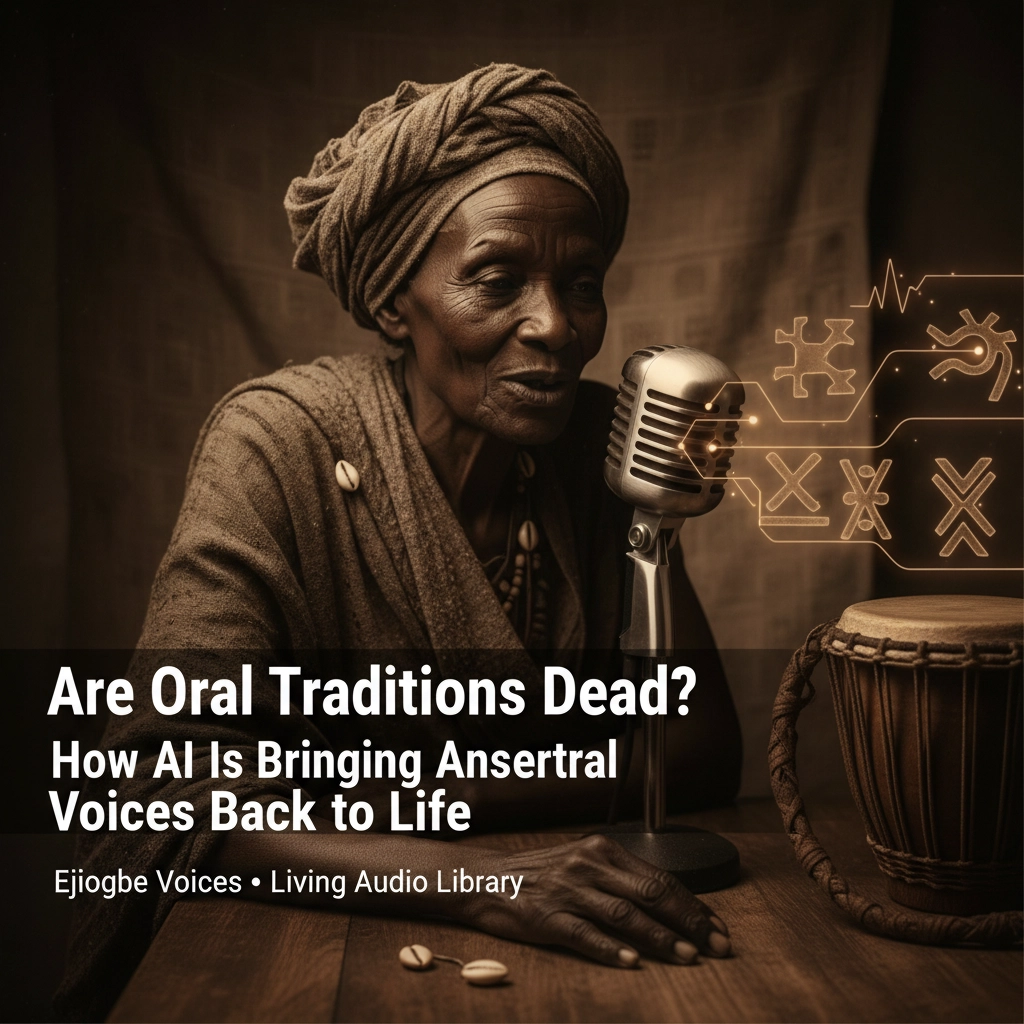

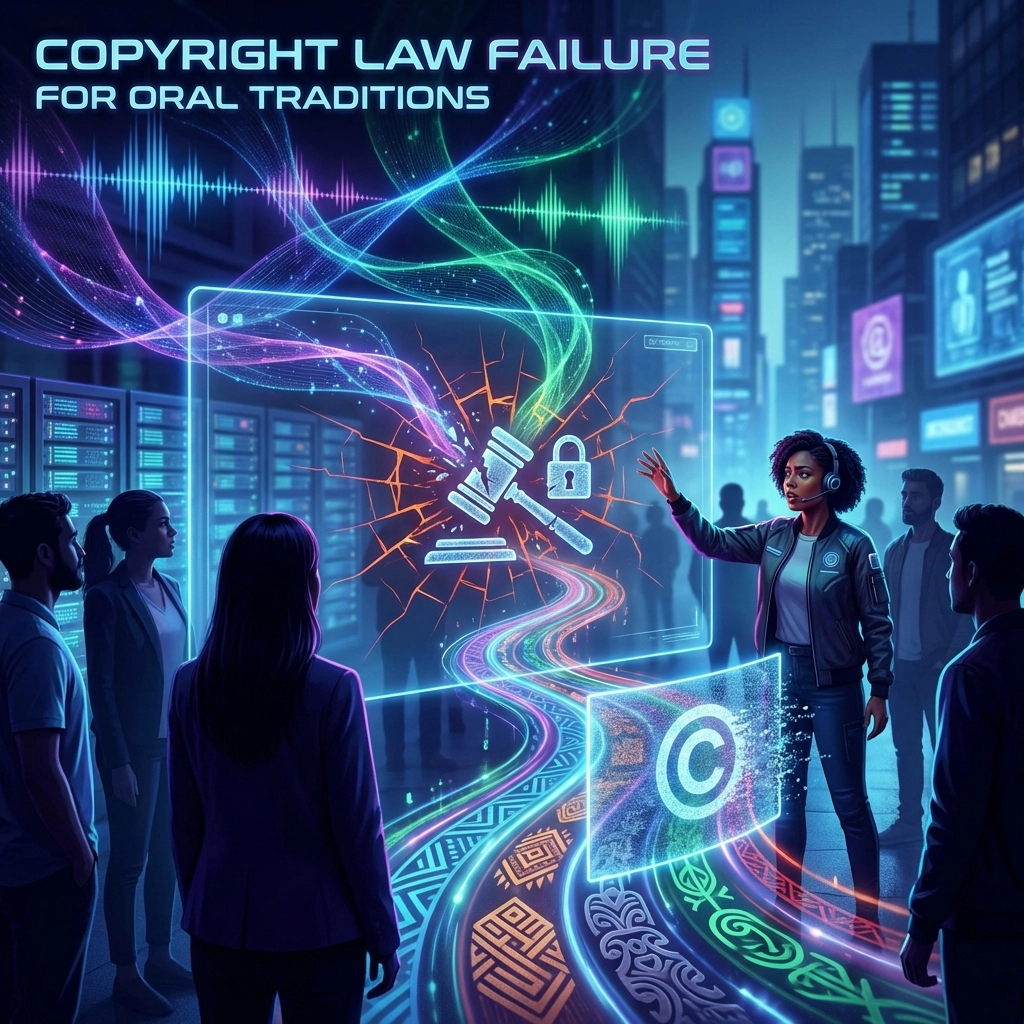
The collision between Western copyright law and Indigenous oral traditions represents one of the most profound failures of our legal system to protect cultural heritage. While copyright was designed to safeguard the creative works of individual authors in a market economy, oral traditions embody the collective wisdom of entire communities, passed down through generations with sacred protocols that copyright law fundamentally misunderstands and misrepresents.
This mismatch isn't merely technical: it's philosophical, spiritual, and deeply consequential for Indigenous communities worldwide. As our digital age accelerates the documentation and potential commercialization of traditional knowledge, understanding why copyright fails oral traditions becomes crucial for anyone committed to cultural preservation and Indigenous sovereignty.
The Fundamental Mismatch: Fixed vs. Living Knowledge
Copyright law operates on a simple premise: it protects fixed expressions created by identifiable authors for limited time periods. An author writes a book, records a song, or creates a painting: these tangible works receive protection for the author's lifetime plus 70 years, or 95 years from publication for corporate works.

Oral traditions shatter every assumption underlying this framework. Traditional stories, songs, prayers, and teachings exist as living knowledge systems that evolve with each telling, adapt to new circumstances, and carry forward the collective wisdom of ancestors. They have no single author: they belong to entire communities, clans, or nations. They have no fixed form: each elder may tell the same story differently, adding personal insights while maintaining core truths.
Most importantly, oral traditions have no expiration date. They are designed to be perpetual, carrying forward ancestral guidance for generations yet unborn. The Western concept of intellectual property eventually entering the "public domain" makes no sense when applied to knowledge systems that were always meant to be held in trust by specific communities.
The Individual Ownership Trap
Perhaps the most damaging aspect of copyright's failure lies in its emphasis on individual ownership over collective stewardship. When oral traditions are documented: whether in written form, audio recordings, or digital archives: copyright law typically assigns ownership to whoever creates the "fixed expression."
This creates absurd and harmful scenarios. An anthropologist recording traditional songs might hold copyright over those recordings. A linguist transcribing oral histories could own the written versions. A filmmaker documenting ceremonies might control the visual representation of sacred practices. Meanwhile, the originating communities: whose ancestors developed, refined, and transmitted this knowledge over centuries: may have no legal rights to control how their heritage is used.

The vagueness of intellectual property law regarding collective ownership means that communities often become strangers to their own cultural expressions once those expressions enter the copyright system. This isn't just legally problematic: it's a form of cultural violence that separates communities from their ancestral wisdom and places that wisdom under the control of outsiders.
The Public Domain Trap
Even when Indigenous communities manage to establish copyright protection for documented versions of their traditions, this protection eventually expires. Under current law, these works will eventually enter the public domain, becoming freely available for anyone to use, adapt, or commercialize without restriction.
This "public domain" concept fundamentally violates Indigenous protocols around traditional knowledge. Sacred stories, ceremonial songs, and ancestral teachings were never intended to be "public" in the Western sense. They belong to specific communities and should be shared according to traditional protocols, not market forces.
Once oral traditions fall into the public domain, third parties can create derivative works, adaptations, or "inspired" creations without any compensation to originating communities. Disney can adapt traditional stories into commercial films. Fashion companies can use traditional patterns without permission. Tech companies can train AI systems on traditional songs without consultation.

The communities that preserved these traditions through generations of colonization, forced assimilation, and cultural suppression receive nothing: not compensation, not credit, not even consultation about appropriate use.
Real-World Consequences for Communities
These legal failures have devastating practical consequences. Indigenous communities worldwide report:
Loss of Control: Communities lose the ability to determine how their sacred knowledge is shared, taught, or represented to the world.
Cultural Appropriation: Traditional knowledge becomes raw material for commercial ventures that profit outsiders while offering nothing to originating communities.
Misrepresentation: Sacred teachings may be reduced to entertainment, simplified for mass consumption, or combined with inappropriate elements that violate cultural protocols.
Economic Exploitation: Valuable traditional knowledge: from medicinal practices to artistic techniques: generates wealth for corporations while the communities that developed this knowledge remain economically marginalized.
Spiritual Harm: The commodification of sacred knowledge can cause genuine spiritual distress in communities where certain teachings should only be shared in appropriate contexts with proper preparation.
What Copyright Cannot Protect
Copyright's limitations become even clearer when we consider what oral traditions actually encompass. Traditional knowledge systems include:
- Contextual wisdom that changes meaning based on the listener's readiness, the season, or the circumstances
- Sacred protocols about who can learn certain knowledge, when it can be shared, and how it should be transmitted
- Relational understanding where knowledge exists in relationships between people, places, and spiritual forces rather than as discrete "content"
- Ceremonial practices that integrate knowledge with spiritual observance, making the knowledge inseparable from its sacred context
- Intergenerational guidance where the same story carries different lessons for children, adults, and elders

No copyright framework can protect these multidimensional aspects of traditional knowledge because copyright fundamentally treats knowledge as a commodity rather than a relationship.
Alternative Frameworks and Community Solutions
Recognizing copyright's failures, Indigenous communities and supportive legal scholars have developed alternative approaches:
Traditional Cultural Expression (TCE) Protections through international bodies like WIPO offer more community-centered frameworks, though implementation remains limited.
Indigenous Cultural Rights instruments recognize collective ownership and community protocols, providing stronger legal foundations for protection.
Community-controlled protocols that prioritize Indigenous sovereignty over traditional knowledge, regardless of external legal frameworks.
Collaborative partnerships where institutions work with communities to develop respectful documentation and preservation practices.
The Need for Community-Controlled Systems
The failure of copyright law points toward a fundamental truth: Indigenous communities must maintain control over their own cultural preservation efforts. Rather than forcing traditional knowledge into Western legal frameworks, we need systems designed around Indigenous protocols and community sovereignty.
This means developing digital archives where communities control access, determining who can learn what knowledge and under what circumstances. It means creating preservation systems that maintain the living, contextual nature of traditional knowledge rather than reducing it to fixed documentation.

At Ejiogbe Voices, we recognize that true preservation must honor both the technical requirements of digital preservation and the cultural protocols that give traditional knowledge meaning. Our platform prioritizes community control over convenient access, understanding that not all knowledge should be equally available to all people.
Moving Beyond Copyright's Limitations
The path forward requires acknowledging that copyright law, despite good intentions, cannot protect what matters most about oral traditions. Instead of trying to force traditional knowledge into Western legal frameworks, we must develop new approaches that honor Indigenous sovereignty, community protocols, and the living nature of traditional knowledge systems.
This isn't just about legal reform: it's about recognizing fundamentally different ways of understanding knowledge, ownership, and cultural responsibility. As we build digital tools for language preservation and cultural documentation, we must ensure these tools serve Indigenous communities rather than external interests.
The failure of copyright law to protect oral traditions teaches us that preservation without community control is not preservation at all: it's appropriation with good intentions. True cultural preservation requires legal frameworks, technical systems, and institutional practices that place Indigenous communities at the center of decisions about their own heritage.
For communities working to preserve their traditional knowledge, this means demanding more than copyright protection. It means insisting on systems that honor your protocols, respect your sovereignty, and ensure your ancestral wisdom remains under your stewardship for generations to come.