
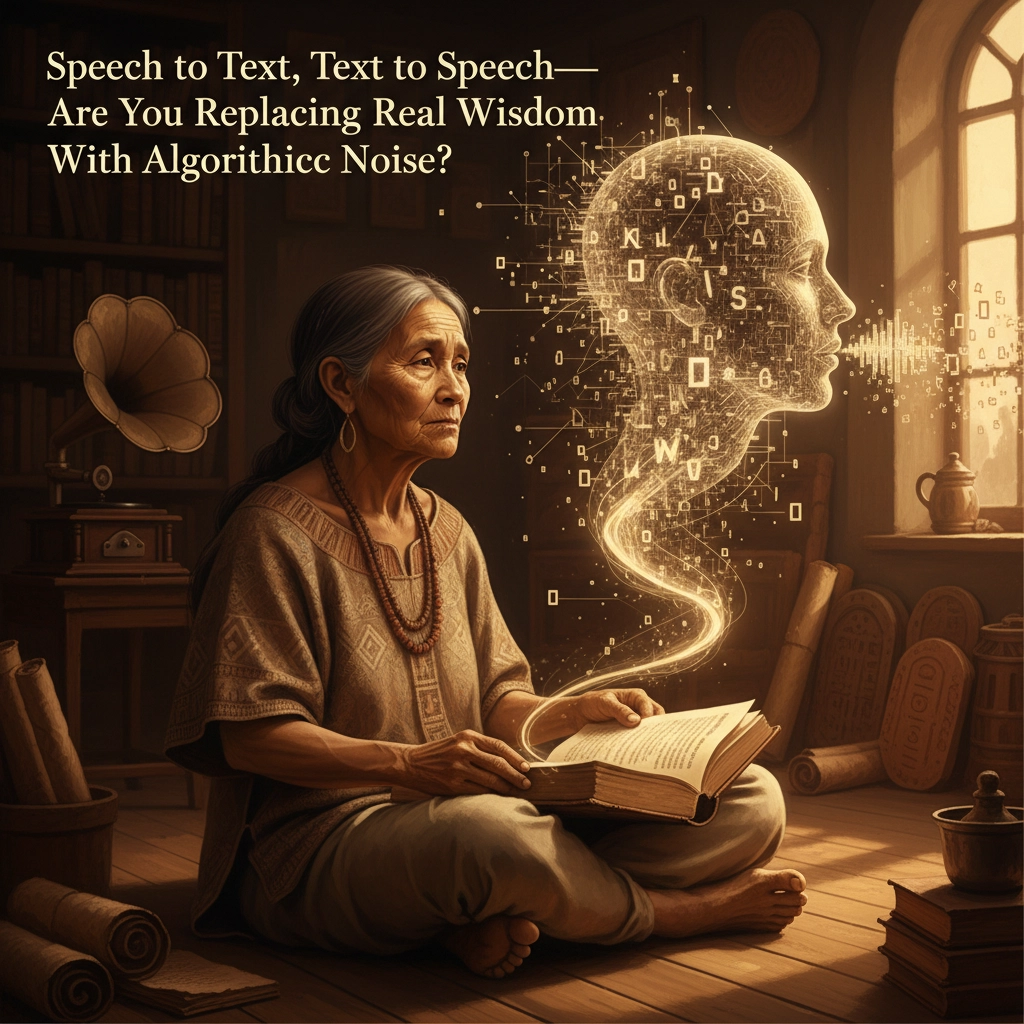
We're living through a revolution in voice technology. Every day, new apps promise to transcribe our meetings, clone our voices, and convert text into speech with unprecedented accuracy. But here's the uncomfortable truth: most of these tools are creating a digital Tower of Babel, where the noise of algorithmic processing drowns out the authentic voices that carry our deepest wisdom.
The question isn't whether speech-to-text and text-to-speech technologies work: they do, within their narrow parameters. The question is whether we're using them to preserve something meaningful, or simply adding to the digital static that already overwhelms our communities.
The Algorithmic Promise vs. Cultural Reality
Modern speech-to-text systems boast impressive statistics. The best commercial systems achieve 80-85% accuracy rates under ideal conditions. Text-to-speech engines can synthesize speech that sounds increasingly human-like. Yet when we examine these technologies through the lens of cultural preservation and authentic wisdom transmission, their limitations become glaring.

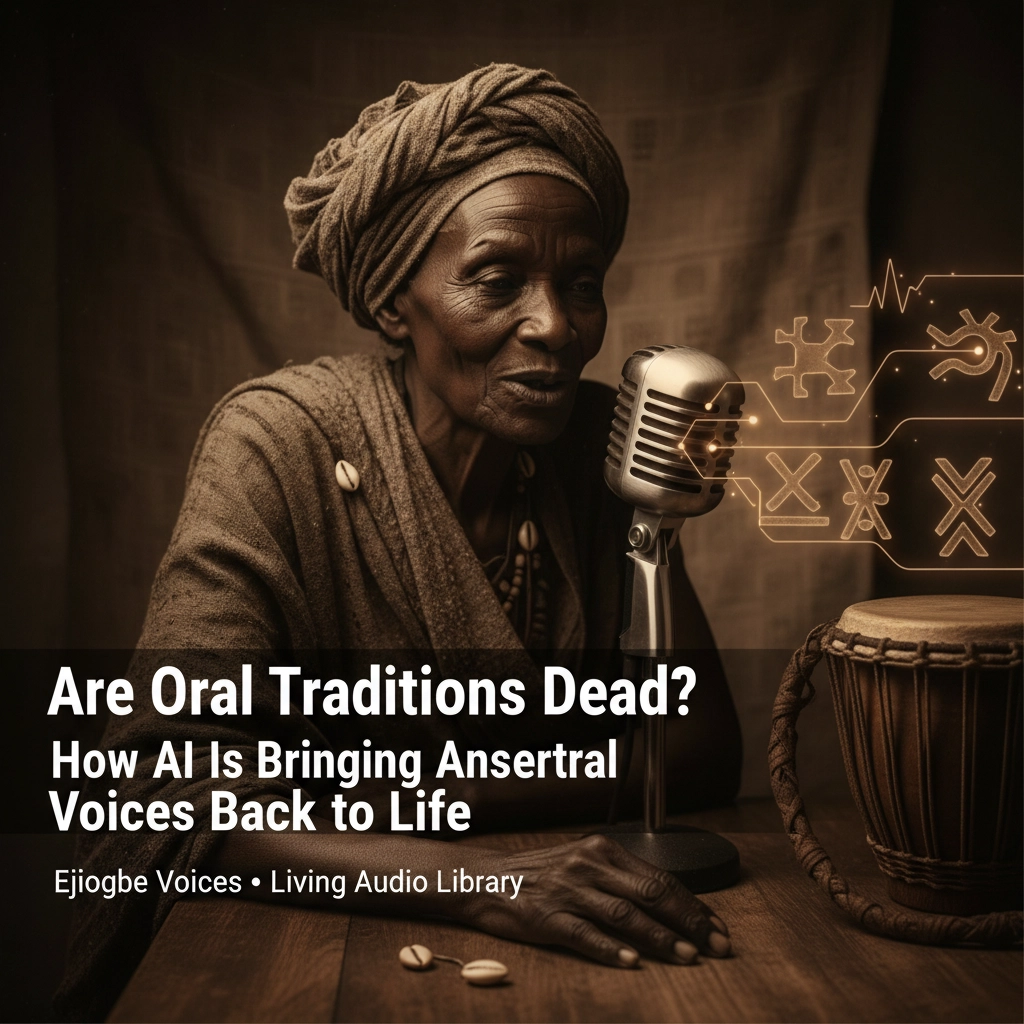
Consider what happens when an elder shares ancestral knowledge through these systems. The algorithm captures words, but it cannot preserve the intentional pauses, the cultural context embedded in tone, or the sacred rhythm that transforms information into wisdom. The technology processes sound waves and converts them into standardized text, stripping away the very elements that make oral tradition powerful.
The accuracy problem runs deeper than technical specifications. While human transcription achieves 99% accuracy, even the most advanced AI systems struggle with:
- Regional dialects and accents that carry cultural identity
- Sacred terms and proper names in indigenous languages
- The subtle vocal inflections that convey meaning beyond words
- Background elements like ritual sounds or environmental context that are integral to the wisdom being shared
When Efficiency Becomes Cultural Erasure
The corporate world has embraced these technologies for their efficiency. Boardrooms use voice-to-text for meeting minutes. Companies deploy text-to-speech for customer service. The focus remains on speed, cost reduction, and scalability: metrics that make perfect sense for quarterly reports but catastrophic sense for cultural preservation.
Here's where the "algorithmic noise" problem becomes most evident: these systems weren't designed to honor the source of the wisdom they're processing. They treat a grandmother's prayer with the same algorithmic approach as a business memo. They convert a traditional teaching into the same standardized output format as a product description.

The result? We're creating vast databases of digitized content that look like preservation but function more like cultural flattening. The nuance, the reverence, the lived experience that transforms information into wisdom: all reduced to text files and audio samples that any machine can replicate.
The Voice Cloning Dilemma
Voice cloning technology adds another layer to this challenge. Now we can create synthetic versions of voices that sound remarkably authentic. But authenticity in sound is not the same as authenticity in wisdom transmission.
When we clone a voice, we're capturing acoustic patterns: the technical signature of how someone's vocal cords, mouth shape, and speech patterns create sound waves. We're not capturing their lived experience, their cultural context, or the intention behind their words. We're creating a sophisticated echo, not preserving the source.
This matters profoundly for communities working to maintain their cultural integrity. A cloned voice might recite traditional stories with perfect pronunciation, but it cannot carry forward the responsibility, the cultural weight, or the spiritual connection that makes those stories sacred rather than merely informational.
Real Wisdom Requires Human Curation
The most crucial distinction between meaningful voice preservation and algorithmic processing lies in human curation. Real wisdom preservation requires people who understand the cultural context, who can identify which elements must be maintained and which can be adapted for digital formats.

Authentic preservation involves:
- Working directly with knowledge holders to understand their intentions
- Preserving not just words, but the cultural framework that gives those words meaning
- Maintaining the relationship between wisdom-keeper and community
- Ensuring that technological tools serve cultural goals rather than replacing them
- Creating systems that honor the source rather than simply replicating the output
This approach requires patience, relationship-building, and deep respect for the wisdom being preserved. It cannot be automated, outsourced, or scaled through purely technical solutions.
Beyond the Binary: A Third Path
The choice isn't between rejecting all voice technology or accepting algorithmic processing as inevitable. There's a third path that uses technology as a tool while maintaining human wisdom at the center of the process.
This path involves:
Intentional Design: Building systems specifically for wisdom preservation rather than generic voice processing. This means different accuracy metrics, different user interfaces, and different success measurements.
Community Partnership: Working with cultural knowledge holders as partners in the design process, not just content sources. Their understanding of what matters guides how the technology functions.
Contextual Preservation: Maintaining the cultural, spiritual, and community context that gives wisdom its power. Technology serves this goal rather than replacing it.

Ongoing Relationship: Understanding that wisdom preservation is not a one-time digitization project but an ongoing relationship between technology, wisdom-keepers, and communities.
The Ejiogbe Voices Approach
At Ejiogbe Voices, we've built our approach around this understanding. Our platform doesn't just convert speech to text or clone voices: it preserves the authentic relationship between elders and their communities while leveraging technology to bridge geographical and generational gaps.
We focus on:
- Working directly with elders and cultural knowledge holders to understand their vision for how their wisdom should be shared
- Preserving the full context of wisdom transmission, not just the audio content
- Creating technology that amplifies rather than replaces the human relationship at the heart of cultural transmission
- Building systems that respect the sacred nature of the content they're designed to preserve
The result is preservation that honors both technological capability and cultural integrity. Instead of creating algorithmic noise, we're building bridges that connect generations while maintaining the authenticity that makes wisdom powerful.
Making the Choice
Every time we choose a voice technology, we're making a choice about what we value. Do we prioritize efficiency over authenticity? Speed over cultural integrity? Scalability over the sacred?

The technologies themselves are neutral: they're tools that can serve different purposes depending on how we design and deploy them. But the way we're currently using most speech-to-text and text-to-speech systems suggests we've prioritized the wrong metrics.
The path forward requires asking different questions:
- Are we preserving wisdom or just digitizing words?
- Are we maintaining cultural relationships or just creating content databases?
- Are we honoring the source of knowledge or just replicating its surface features?
- Are we building technology that serves communities or that replaces them?
Moving Beyond Algorithmic Noise
The future of voice preservation lies not in choosing between human wisdom and technological capability, but in creating systems where technology amplifies authentic wisdom rather than replacing it with algorithmic approximations.
This requires companies, communities, and technology developers to work together with a shared understanding: the goal is not just to make voices audible, but to keep wisdom alive.
When we get this balance right, speech-to-text and text-to-speech technologies become powerful tools for cultural continuity. When we get it wrong, we contribute to the very noise that drowns out the voices we claim to preserve.
The choice is ours. But we must make it intentionally, with full awareness of what's at stake when we decide how to handle the wisdom that previous generations entrusted to us.
Learn more about authentic voice preservation at Ejiogbe Voices