

The digital revolution has promised to connect the world, yet it's systematically excluding hundreds of millions of speakers of African languages. Current AI systems achieve less than 30% accuracy in culturally appropriate translation for Nigerian languages like Yoruba, Hausa, and Igbo, compared to over 85% accuracy for European languages. This stark disparity isn't just a technical oversight: it represents a profound threat to linguistic heritage and cultural identity that demands immediate, culturally-aware solutions.
The Magnitude of Digital Exclusion
When we consider the scale of this technological apartheid, the numbers are staggering. Yoruba has 18-20 million speakers, Hausa boasts over 70 million speakers, and Igbo is spoken by 44 million people. Yet these vibrant languages receive minimal representation in AI training datasets, leaving sophisticated models like ChatGPT or Gemini struggling to recognize, generate, or meaningfully process African languages.
This systematic under-representation creates a two-tier digital ecosystem where only speakers of dominant languages can fully access AI-powered services in healthcare, education, and government. Imagine seeking medical advice through an AI chatbot in your native tongue, only to receive dangerous mistranslations. Consider students unable to access educational content because AI tutoring systems can't understand their questions in Igbo or Yoruba.

Critical Technical Failures Revealing Deeper Problems
The failures in African language processing stem from several technical inadequacies that expose the urgent need for specialized preservation approaches. Cultural Context Mapping Failure represents one of the most significant issues, where AI systems perform direct translations without understanding cultural nuances.
Take the Yoruba word "àṣẹ": AI systems typically translate this as simply "so be it," when its actual meaning encompasses a deeply spiritual concept of divine life force and blessing. This type of mistranslation doesn't just create confusion: it can be culturally offensive and demonstrates a fundamental misunderstanding of how language carries ancestral wisdom and cultural knowledge.
Morphological Complexity Handling Insufficiency presents another critical challenge. African languages often feature complex word formation patterns that current AI tokenization methods cannot properly parse. In Igbo, the word "agụghịla" breaks down into multiple morphological components: "a-" (perfective marker), "gụ" (read), "-ghị" (negative), and "-la" (perfective marker), meaning "has not read yet." Current AI systems show a 91% error rate in grammatical role assignment for such agglutinative forms, revealing their complete inability to handle the sophisticated linguistic structures that characterize many African languages.
Language Endangerment in the Digital Age
The dominance of major languages in AI development poses existential threats to indigenous languages like Igbo and Yoruba. When AI systems fail to support these languages effectively, younger generations may abandon them in favor of languages that "work" with technology, accelerating language death and cultural disconnection.
This digital marginalization creates a vicious cycle: lack of technological support leads to decreased usage, which in turn reduces the data available for improving AI systems. Most AI models and datasets are trained primarily on dominant languages, creating a technological environment that systematically excludes African languages from digital advancement.

The implications extend far beyond technology. When languages fail to adapt to digital spaces, they lose relevance in modern life. Children grow up believing their ancestral tongues are "backwards" or "useless" for engaging with the modern world. Elders' wisdom, encoded in linguistic structures and cultural expressions, becomes increasingly inaccessible to younger generations who navigate primarily through digital interfaces.
The Preservation Imperative: Beyond Simple Digitization
The failures of current AI systems highlight the urgent need for culturally-aware preservation platforms that go beyond simple digitization. Effective preservation requires understanding that African languages carry complex cultural knowledge systems that cannot be captured through conventional Western-centric AI approaches.
Language preservation efforts must incorporate cultural knowledge graphs that map not just literal translations but also spiritual, ceremonial, and social contexts. When an elder speaks about seasonal changes using traditional Yoruba agricultural terms, the AI system needs to understand the interconnected knowledge of farming cycles, spiritual practices, and community relationships embedded in that language.
Current preservation efforts, while promising, remain fragmented and underfunded. Projects like the Igbo Wikipedia, online Igbo dictionaries, and language learning mobile apps have made some progress in digital accessibility. The development of the African Next Voices dataset, supported by $2.2 million in Gates Foundation funding, and Nigeria's launch of its first multilingual LLM in 2024 represent significant steps forward. However, these initiatives often lack the comprehensive organizational backing and sustained funding needed for systematic impact.

Technical Solutions for Cultural Preservation
Culturally-aware preservation platforms must implement several key technical innovations that respect the unique characteristics of African languages. Morphological-aware tokenization systems need to process morphological boundaries instead of arbitrary subwords, recognizing the agglutinative nature of many African languages.
Cultural context mapping should create comprehensive knowledge graphs that capture the spiritual, social, and ceremonial dimensions of language use. When preserving proverbs, prayers, or traditional stories, these platforms must understand the cultural contexts in which they're used, the relationships they express, and the wisdom they encode.
These platforms must also incorporate community-driven development approaches that partner with linguists, cultural keepers, and native speakers rather than imposing external technological frameworks. The success of community-driven projects like IgboAPI demonstrates what becomes possible when proper linguistic expertise guides technological development, ensuring that preservation efforts honor rather than distort cultural meanings.
Economic and Social Implications
The AI failure in African languages represents not just a technological challenge but a massive economic opportunity. Nigeria's tech industry could become a global exporter of African language technologies if proper investment and development occur. However, the current digital divide excludes millions from participating in the digital economy, limiting access to AI-powered services in critical areas like healthcare, education, and governance.
The preservation of African languages through culturally-aware AI platforms could serve as a model for other marginalized languages worldwide. By developing technologies that respect linguistic diversity and cultural complexity, the global AI community can create more inclusive systems that serve humanity's full linguistic heritage rather than just the dominant few languages.

Building Bridges Between Ancestral Wisdom and Digital Innovation
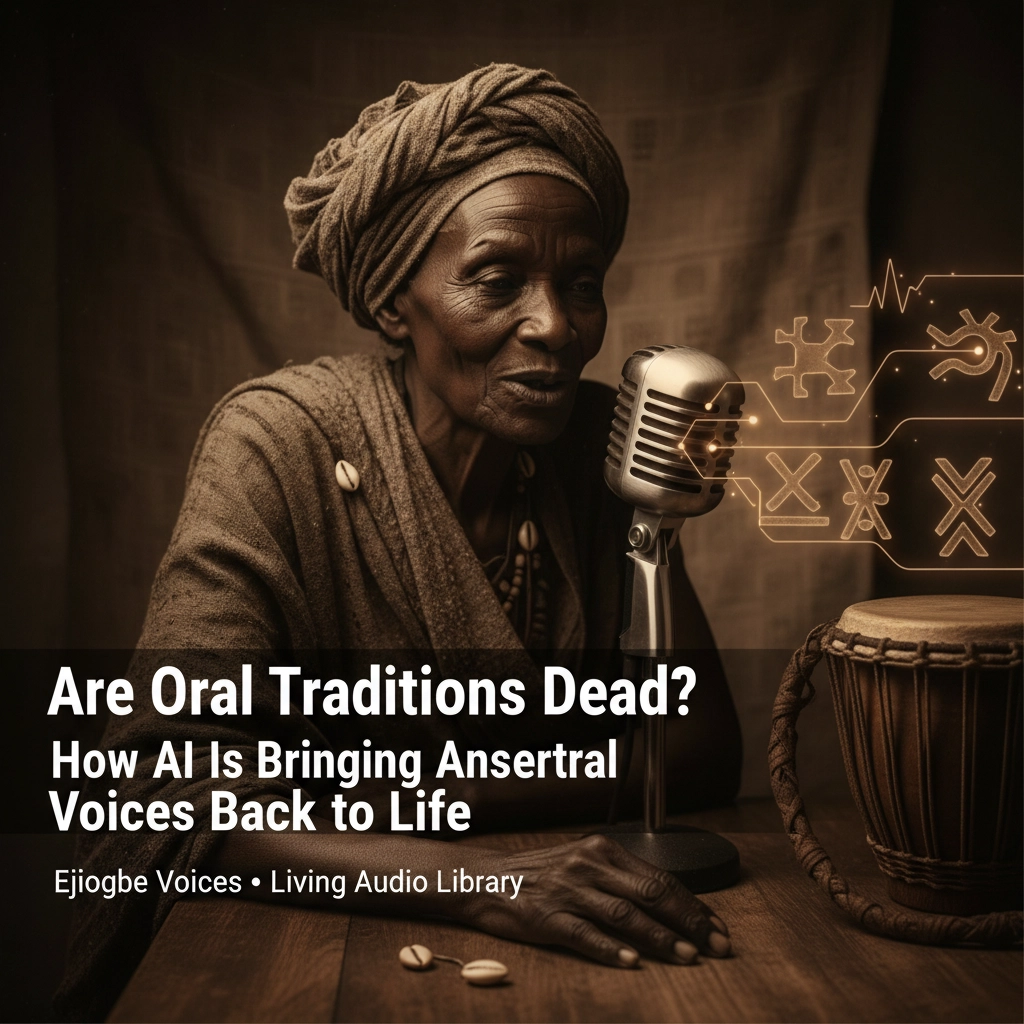
The path forward requires collaboration between technology companies, cultural institutions, and local communities. Platforms like Ejiogbe Voices demonstrate how technology can be designed with deep respect for cultural heritage, creating bridges between ancestral wisdom and digital innovation.
These culturally-aware platforms must prioritize elder voices as the primary source of linguistic and cultural knowledge. Rather than training AI on internet scraping or academic texts, preservation platforms should center the lived experiences and traditional knowledge of community elders who carry the deepest understanding of language use in cultural contexts.
The Urgent Call for Action
The systematic failure of AI systems to process African languages effectively reveals the urgent need for a paradigm shift toward culturally-informed, linguistically diverse AI development. We cannot allow technological advancement to accelerate the extinction of rich linguistic traditions that carry thousands of years of accumulated wisdom.
Every day that passes without culturally-aware preservation platforms represents lost opportunities to capture elder voices, traditional knowledge, and cultural practices that may never be recoverable. The digital divide in AI language processing isn't just a technical problem: it's a cultural emergency that threatens the continuity of ancestral wisdom for future generations.
Only through comprehensive, community-driven preservation platforms that respect the cultural depth and linguistic complexity of African languages can we prevent the digital extinction of these rich linguistic traditions while ensuring equitable access to technological advancement for all speakers. The technology exists; what we need now is the collective will to prioritize cultural preservation alongside digital innovation.