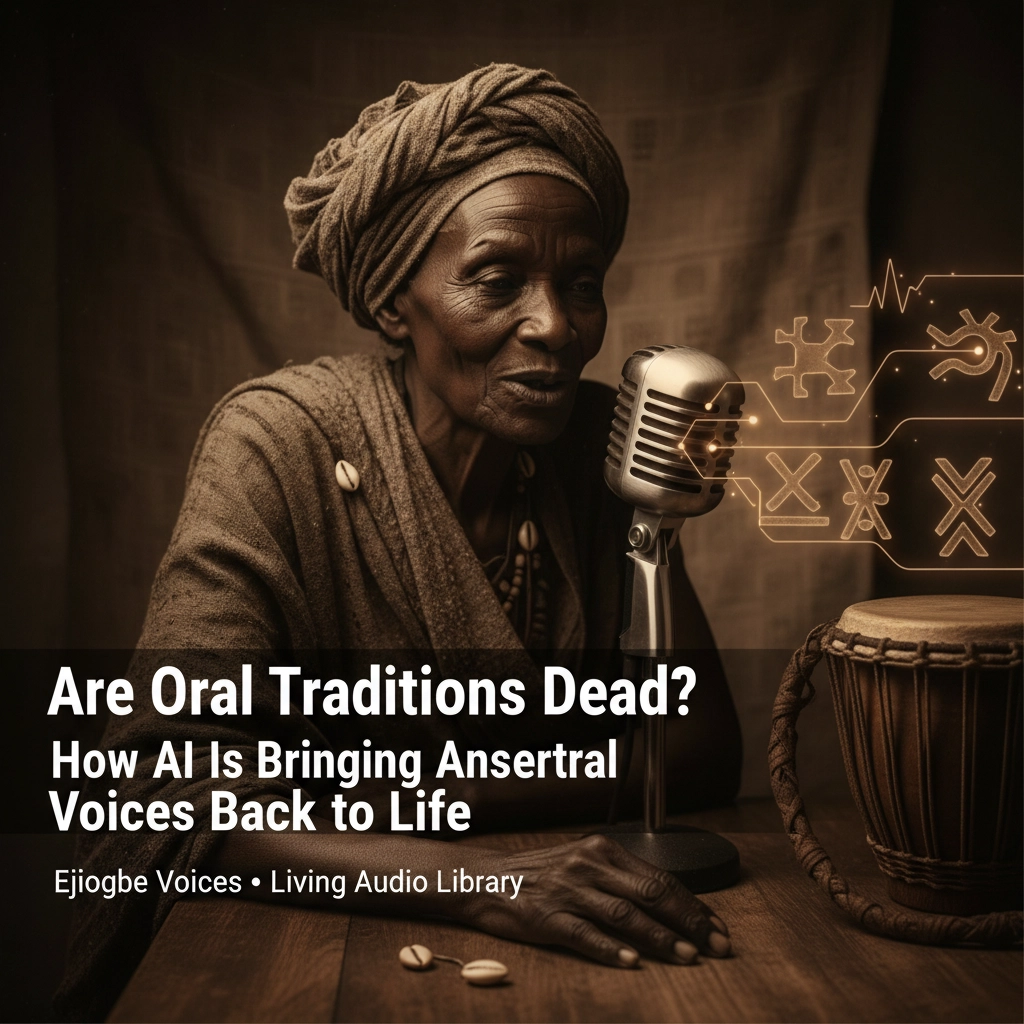


Across communities worldwide, a quiet revolution is unfolding. Young people are picking up microphones, cameras, and smartphones not to create the next viral trend, but to preserve something far more precious: the ancestral voices and cultural wisdom of their elders. From Caribbean grandmothers sharing herbal remedies to Aboriginal storytellers recounting dreamtime narratives, these emerging cultural archivists are racing against time to safeguard heritage that risks being lost forever.
But as these passionate young creators step into roles traditionally held by institutions and academics, a critical question emerges: are they receiving the support they truly need to succeed in this vital mission?
The Digital Generation Meets Ancient Wisdom
Twenty-two-year-old Amara from Lagos has spent the past three years recording her grandmother's Yoruba proverbs and traditional cooking methods. Using nothing more than her smartphone and free editing software, she's created a digital archive that has reached thousands of young Nigerians living in the diaspora. "My grandmother would tell these stories while we cooked together," Amara explains. "I realized these weren't just recipes: they were lessons about life, family, and our connection to the ancestors."

Her story echoes across continents. In Samoa, 19-year-old Taumalolo documents traditional tatau designs and their spiritual significance. In the mountains of Peru, Maya communities work with young people to record Quechua songs that encode agricultural knowledge passed down through generations. These creators understand something profound: cultural preservation cannot wait for formal institutions to catch up.
The tools available to young archivists today would have seemed miraculous to previous generations. High-quality recording equipment fits in their pockets. Cloud storage allows them to preserve thousands of hours of content. Social media platforms provide instant distribution to global audiences hungry for authentic cultural connection.
Bridging Sacred and Digital
What sets these young cultural archivists apart from their institutional counterparts is their intuitive understanding of how to make ancient wisdom accessible without compromising its sacred nature. They navigate the delicate balance between preservation and protection, knowing which stories can be shared publicly and which must remain within community circles.
Kofi, a 26-year-old from Accra, has developed a unique approach to archiving Akan proverbs. Working closely with traditional chiefs and elders, he creates short video explanations that contextualize each saying within modern life while maintaining its spiritual integrity. "The elders were skeptical at first," he admits. "But when they saw young people in London and New York commenting about how these proverbs helped them through difficult times, they understood the power of what we were doing."

This intergenerational collaboration represents one of the most beautiful aspects of the young archival movement. Rather than working in isolation, successful young creators have learned to position themselves as bridges between worlds: translating elder knowledge into formats that resonate with digital natives while ensuring cultural authenticity remains intact.
The Support Landscape: Promising but Patchy
When examining the support available to these emerging cultural archivists, a mixed picture emerges. Some young creators benefit from formal programs and institutional backing. The Museum of Croydon's Young Archivists program, for instance, attracted over 100 applications for just ten positions, demonstrating both tremendous interest and limited capacity. Similar initiatives like the New Curators Project at UCL and specialized programs targeting underrepresented communities show that institutions recognize the value young people bring to cultural preservation.
However, these formal programs represent just the tip of the iceberg. The vast majority of young cultural archivists work independently, driven by personal passion rather than institutional support. They fund their projects through part-time jobs, rely on family equipment, and learn technical skills through YouTube tutorials.
"I've been documenting traditional Caribbean healing practices for four years," says Keisha, a 24-year-old from Trinidad. "I've never received any formal training or funding, but my grandmother's knowledge is disappearing with every elder who passes away. I can't wait for someone to give me permission to preserve it."
The Critical Gaps
Despite their passion and dedication, young cultural archivists face significant barriers that limit their impact. Funding remains the most obvious challenge. Quality recording equipment, professional editing software, and reliable storage solutions require substantial investment that many young creators cannot afford.
Technical training represents another crucial gap. While young people are digital natives, cultural archiving requires specialized skills in audio engineering, video production, and metadata organization. Most learn these skills through trial and error, leading to inconsistent quality and potential loss of irreplaceable content.

Access to elders poses a particularly poignant challenge. Many traditional knowledge holders are elderly and may be hesitant to work with young people they don't know personally. Building trust across generational lines takes time: a luxury that becomes increasingly scarce as elder populations age.
Legal and ethical guidance also proves essential but often unavailable. Questions about intellectual property rights, consent protocols, and appropriate sharing practices require careful navigation. Without proper guidance, well-intentioned young archivists may inadvertently violate cultural protocols or expose sacred knowledge to inappropriate audiences.
Stories of Resilience and Innovation
Despite these challenges, remarkable stories of success emerge from communities worldwide. In New Zealand, a group of young Māori creators launched a collaborative project to document traditional whakapapa (genealogies) and mōteatea (traditional chants). Working with minimal resources, they developed innovative storytelling techniques that combine oral tradition with visual elements, creating archives that feel both ancient and contemporary.
Similarly, young Indigenous creators in Canada have pioneered new approaches to language preservation, creating interactive apps and games that make learning ancestral languages engaging for children and teens. Their work demonstrates how cultural archiving can evolve beyond simple documentation to become active tools for cultural revitalization.
In the Caribbean, a network of young archivists has emerged organically through social media, sharing resources, techniques, and even collaborative projects across islands. This peer-to-peer support system has proven invaluable in overcoming isolation and resource constraints.
The Path Forward
The enthusiasm and dedication of young cultural archivists deserves more than our admiration: it demands our active support. Several key interventions could dramatically amplify their impact:
Community-centered funding models that prioritize grassroots projects over institutional initiatives would ensure resources reach the creators doing the most vital work. Small grants of $500-2000 could provide transformative support for equipment and training.
Mentorship programs connecting experienced archivists with young creators would accelerate skill development while ensuring best practices in cultural sensitivity and technical quality. These relationships could bridge the gap between institutional knowledge and community passion.

Technology partnerships with companies like Ejiogbe Voices could provide young archivists with access to professional-grade tools specifically designed for cultural preservation. When technology serves community needs rather than extractive purposes, remarkable preservation becomes possible.
Elder engagement initiatives that specifically facilitate connections between traditional knowledge holders and young documentarians could ensure that precious wisdom transfers successfully to the next generation of cultural guardians.
Honoring the Bridge-Builders
Young cultural archivists represent something profound: a generation that refuses to let ancestral wisdom disappear into the digital age. They understand that cultural preservation is not about creating museum pieces, but about keeping living traditions alive and relevant for contemporary communities.
Their work deserves recognition not just as a hobby or side project, but as essential cultural labor that benefits entire communities and future generations. When we support these young creators, we invest in the continuity of human knowledge and the preservation of our collective wisdom.
The question is not whether young people are capable of becoming cultural archivists: they already are. The question is whether we will provide them with the support they need to fully realize this vital mission. The ancestors whose voices they're working to preserve, and the generations who will inherit this precious archive, depend on our answer.