

In classrooms across the world, something remarkable is happening. Students are closing their textbooks and leaning in closer: not to screens or tablets, but to the voices of their elders. They're discovering that the most profound lessons about culture, resilience, and identity don't come from printed pages, but from the stories whispered across kitchen tables, shared in community centers, and passed down through generations.
This shift represents more than just a change in teaching methods. It's a recognition that lived experiences hold truths that no textbook can capture: the tremor in a grandmother's voice as she recalls leaving her homeland, the pride that swells when describing a cultural tradition, or the wisdom embedded in everyday decisions that shaped entire communities.
The Silent Gaps in Traditional Education
Traditional textbooks, for all their structured knowledge, carry inherent limitations that become more apparent with each passing year. These educational resources often present oversimplified narratives that reduce complex cultural experiences to dates, events, and broad generalizations. More troubling still, they frequently exclude the stories of marginalized communities entirely, presenting what many scholars recognize as predominantly Eurocentric interpretations of history and culture.

Students from diverse backgrounds regularly find themselves absent from these traditional sources. Their families' journeys, their communities' struggles and triumphs, their cultural practices: all reduced to footnotes or omitted entirely. This absence makes history feel disconnected from their own lived reality, transforming what should be deeply personal and relevant into something that feels foreign and irrelevant.
The standardized nature of textbooks means they focus on major events and prominent figures while glossing over the everyday experiences that actually shape cultural identity. We learn about wars and treaties, but miss the stories of how families maintained their traditions during displacement. We read about social movements, but don't hear from the individuals who quietly changed their communities one conversation at a time.
The Heartbeat of Human Experience
Oral histories breathe life into the spaces textbooks leave empty. When an elder shares their story, they don't just recount facts: they recreate moments. The listener hears not just what happened, but how it felt, what it meant, and why it mattered. These narratives preserve the details that official documents routinely overlook: what people ate during difficult times, how they celebrated small victories, the songs they sang while working, the prayers they whispered for protection.
The emotional resonance of storytelling creates connections that transcend time. When young people hear their grandmother's actual voice describing her childhood, complete with laughter, pauses, and changes in tone, they connect with emotional truths that static text simply cannot convey. They begin to understand not just their family's history, but the broader human experience of navigating challenge and change with dignity and hope.
These stories reveal the deeper values embedded in seemingly ordinary activities. A recipe becomes a lesson in resourcefulness during hard times. A childhood game transforms into understanding of community bonds. A family tradition unveils centuries of wisdom about maintaining cultural identity while adapting to new circumstances.
Transforming Hearts and Minds in Education
In educational settings, oral history projects create immersive learning experiences that engage students in ways traditional textbook study cannot match. Students develop critical skills including active listening, empathy, and analytical thinking as they learn to ask thoughtful questions and consider multiple perspectives on complex historical narratives.

Rather than memorizing facts and dates, students engaging with oral histories learn to think critically about sources, recognize bias, and understand how individual experiences contribute to larger historical patterns. They discover that history isn't a fixed narrative, but a collection of interconnected stories that continue to evolve with each telling.
The educational benefits extend far beyond academic achievement. Students build communication skills and cultural awareness through direct engagement with personal stories. They develop empathy as they connect with individuals whose experiences might initially seem very different from their own. Most importantly, they learn to value the wisdom that exists within their own communities: wisdom that mainstream curricula often overlooks entirely.
Preserving What Matters Most
Oral histories serve as powerful tools for cultural preservation, particularly for communities whose stories traditional documentation has historically ignored or misrepresented. These narratives capture the full spectrum of human experience, ensuring that diverse voices contribute to our collective understanding rather than being marginalized or forgotten.
For families and communities, shared stories create bonds that transcend generations. Children learn not just what their ancestors did, but who they were as people: their hopes, fears, humor, and humanity. These connections help individuals understand their place within a larger cultural narrative while maintaining pride in their heritage.
Communities use oral histories to explain why certain places hold significance, how neighborhoods developed their distinctive character, and what events shaped local identity. These stories keep languages vibrant, traditions alive, and cultural practices meaningful for younger generations who might otherwise lose connection to their roots.
Beyond the Official Record
Perhaps the most compelling aspect of oral histories lies in their ability to challenge and supplement official historical records. While traditional documentation focuses on major events and prominent figures, personal narratives spotlight the experiences of ordinary people and reveal how historical events affected real families and communities.

This ground-level perspective provides crucial context that helps listeners understand not just what happened, but how it shaped the people who lived through it. A grandmother's story about working in factories during wartime reveals economic realities that statistics cannot capture. An elder's account of community organizing illuminates grassroots activism that rarely appears in official histories.
Oral histories also serve as catalysts for understanding contemporary issues by highlighting personal experiences related to civil rights, immigration, economic change, and social justice. These stories raise awareness, inspire empathy, and help communities recognize both their shared challenges and their collective strength.
The Ripple Effect of Authentic Voices
When we prioritize oral histories, we create space for authentic cultural experiences to inform our understanding of the world. These stories don't just preserve the past: they shape how we interpret the present and envision the future. They remind us that behind every statistic, policy, or historical event are real people whose experiences matter.
Young people who engage with oral histories develop a deeper appreciation for the complexity of human experience. They learn that culture isn't something static to be studied from a distance, but something alive and dynamic that they actively participate in creating. They discover that they, too, have stories worth sharing and wisdom worth preserving.
Honoring the Storytellers
The growing recognition of oral histories' value reflects a broader understanding that authentic cultural experiences cannot be fully captured through standardized textbooks alone. By creating platforms and opportunities for storytelling, we honor the wisdom of our elders while ensuring that their voices continue to guide and inspire future generations.
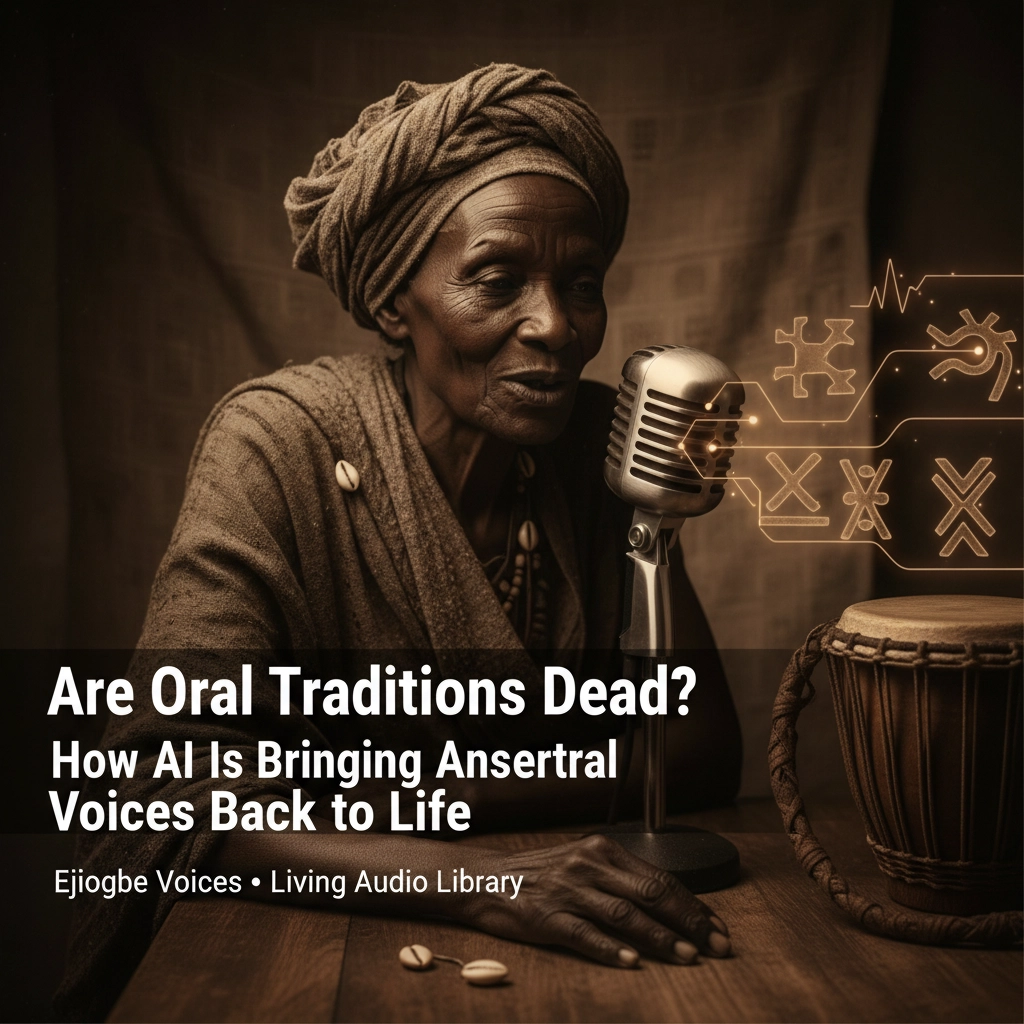
At Ejiogbe Voices, we understand that technology can serve as a bridge between generations, amplifying the voices that matter most while preserving them for the communities that need them. When we combine the intimacy of oral tradition with the reach of digital platforms, we create new possibilities for cultural preservation and intergenerational connection.
The power of oral histories lies not just in their ability to inform, but in their capacity to transform how we see ourselves and our communities. They remind us that every voice matters, every story has value, and every generation has both wisdom to share and lessons to learn. In a world increasingly dominated by digital information, these human connections become more precious: and more essential( than ever before.)