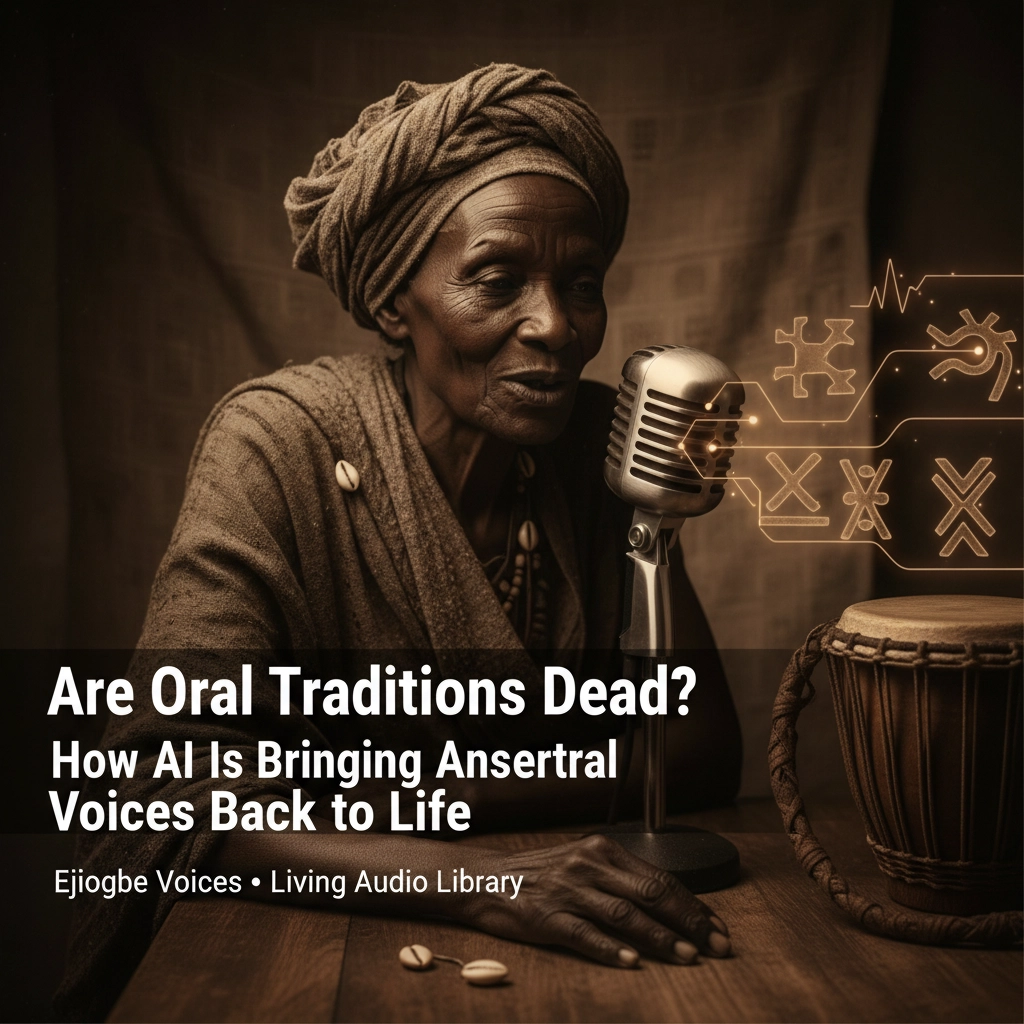

Every day, ancestral voices grow quieter. Elders pass on, recordings degrade, and languages that carried millennia of wisdom edge closer to silence. The race to preserve Indigenous knowledge has never been more urgent, or more complex. Across the globe, communities and technologists have built digital archives to safeguard what remains, each approaching the challenge with different tools, philosophies, and visions.
Now, a new platform enters the conversation: Ejiogbe Voices. It asks a provocative question: What if preservation and learning could happen in the same space? What if the archive itself could teach you to speak, to listen, to carry forward the words your ancestors once knew?
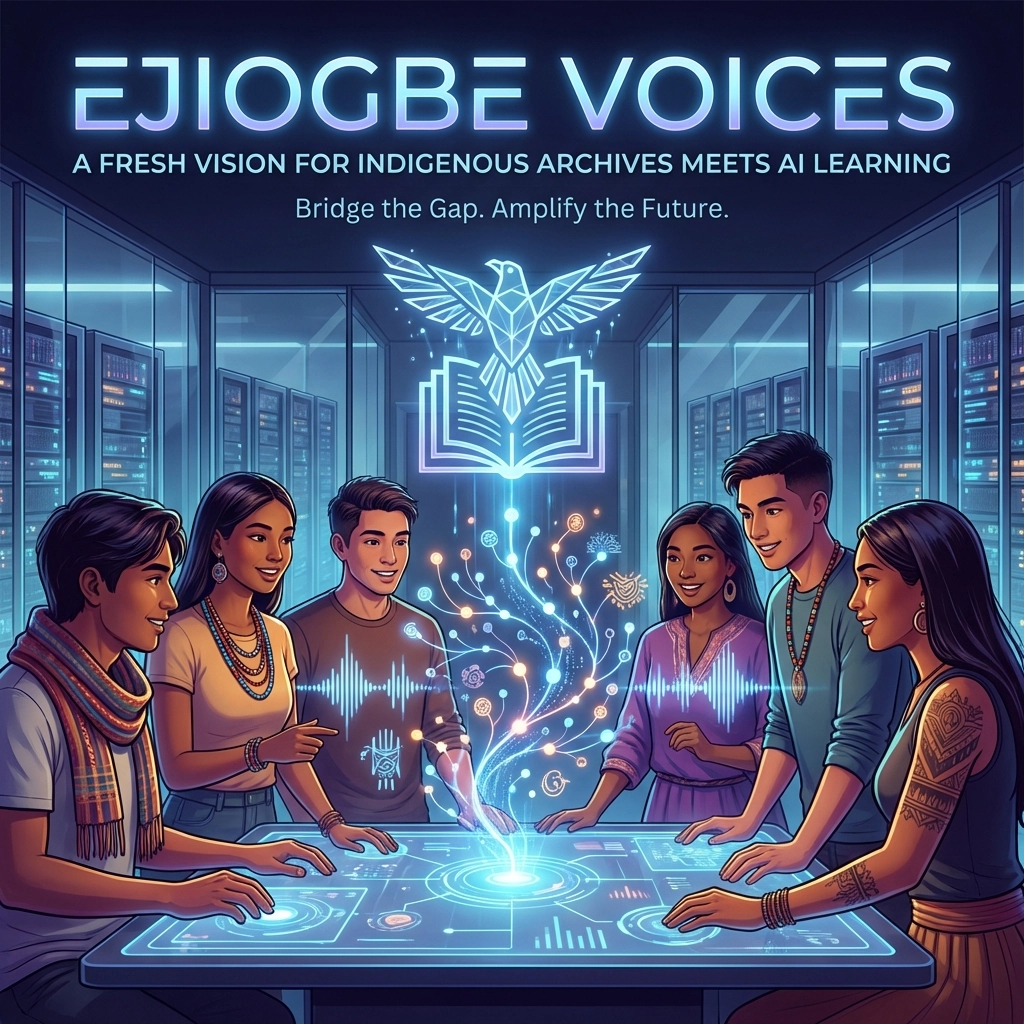
This is the fresh vision driving Ejiogbe Voices, a hybrid of cultural archives and AI-powered language learning, designed to honor the past while equipping communities for the future.
Honoring the Wider Effort
Around the world, many dedicated projects are working to preserve languages and cultural memory. We honor that shared mission. This article focuses on Ejiogbe Voices—our vision, technology, and community-led approach to safeguarding ancestral wisdom and making it learnable.
A Hybrid Approach: Where Ejiogbe Voices Charts New Territory
Ejiogbe Voices embraces a different premise: that preservation and active learning are two sides of the same coin. The platform combines a rich, searchable archive of audio recordings, manuscripts, and cultural artifacts with a suite of AI-driven language-learning tools, all within a single, unified interface.
This hybrid model means you can explore a recording of an elder's prayer in Yoruba, then immediately practice pronouncing those same sacred phrases with real-time AI feedback. You can read a manuscript in Haitian Creole, translate unfamiliar passages, and save new vocabulary to your personal notebook. The archive becomes not just a repository, but a living classroom.
The vision is clear: global knowledge, local languages, universal access. Ejiogbe Voices positions itself as AI-powered infrastructure for "ancestral intelligence," designed to protect community-owned recordings and traditions before they're lost to what the platform calls "digital amnesia."
Ejiogbe Voices' approach is resonating across the AI ecosystem. We've been accepted into the NVIDIA Inception Program and welcomed into startup programs run by Cartesia, Assembly AI, Murf AI, and Deepgram. These recognitions affirm our innovative path, uniting preservation and learning, and reflect industry confidence in the platform's vision. With access to technical mentorship, advanced voice and transcription tooling, and a community of builders, we are scaling responsibly while honoring Indigenous Data Sovereignty and community-led governance.

Inside the Archive: Audio, Manuscripts, and Artifacts
At the heart of Ejiogbe Voices lies its Archive, a carefully structured collection of audio tracks, manuscripts, and cultural artifacts. The interface invites exploration through a grid of items, each tagged with metadata including language, elder, community, tradition, and status.
Filters allow users to drill into specific cultural clusters. Tabs separate audio recordings from written manuscripts and sacred objects. Each item is tagged as public or with a community code, reinforcing the platform's commitment to controlled, respectful access. Our permissions system is rooted in Indigenous Data Sovereignty and community-defined protocols, with AI-driven analytics to track engagement and growth.
The Elders Directory profiles contributors with headshots and biographies, honoring the voices behind each recording. Filters by language, country, tribe, lineage, and tradition encourage discovery and connection. This is more than a database, it's a living tribute to the wisdom-keepers who make preservation possible.
AI Learning Tools: Speak, Listen, Translate, Remember
Where Ejiogbe Voices truly distinguishes itself is in its AI Learning suite, a comprehensive set of tools designed to transform passive listeners into active learners.
AI Language Tutor
The AI Language Tutor offers real-time voice conversations tailored to your proficiency level and learning goals. Select a target language, choose a practice scenario, and engage in interactive dialogue with AI feedback. This isn't rote memorization, it's immersive, conversational learning.
Pronunciation Practice
Pronunciation Practice delivers native phrases with audio playback and a progress bar. Listen, repeat, and receive feedback on your accuracy. The tool bridges the gap between hearing a language and speaking it with confidence.
Translator
The Translator supports bilingual text input with auto-detect for source language. Enter text or use voice input, and receive translations across a range of categories. It's a practical tool for learners navigating unfamiliar passages in the archive.

Listen (Text-to-Speech)
The Listen feature generates natural-sounding speech from any text passage. Select a voice, enter your text, and hear it spoken aloud. This is especially valuable for learners who want to hear the rhythm and cadence of a language before attempting to speak it themselves.
Notebook
The Notebook stores vocabulary items, goals, and progress. Tabs for saved items and goals allow learners to track their journey over time. A search bar filters entries by vocabulary or pronunciation, making review efficient and personalized.
Flashcards
Flashcards generates decks from any topic description. Set your front and back languages, click "Generate Deck," and create customizable study sets. It's a familiar, effective method enhanced by AI flexibility.
Together, these tools form a self-contained language-learning environment: one that draws directly from the archive's rich cultural materials.
Community-Centered Design: Governance, Protocols, and Collective Wisdom
Ejiogbe Voices is built around the principle that communities should control their own heritage. The Communities page showcases governance structures and collective wisdom for each cultural group. Each community listing includes an image and description, explaining its traditions, lineage, and practices.
Cultural Artifacts are displayed with category tags and status indicators: active, community-coded, or symbolic. Filters and search functions let users narrow by category, status, or community. The design prioritizes preservation and respect, ensuring that sacred objects are handled with dignity.

Curated Collections promise featured bundles of stories, traditions, and knowledge: think "Morning Prayers" or "Initiation Prep." Playlists allow users to create personal collections of recordings and clips, building their own pathways through the archive.
The Analytics Dashboard offers quantitative insight into user engagement, recordings by language, and growth trends. This transparency supports accountability and helps communities understand how their materials are being accessed and valued.
Ethical Questions, Thoughtful Answers
The integration of AI into Indigenous language preservation raises important questions. Who owns the AI models trained on these languages? What happens if funding disappears and access to traditions is compromised? Ejiogbe Voices engages with these challenges directly, emphasizing community stewardship and careful protocols.
By tagging artifacts as "active" or "community-coded," the platform upholds careful stewardship through community-defined permissions, while adding the innovative layer of AI analytics and learning tools. The goal is not to replace human teachers or elders, but to extend their reach across generations and geographies.
A Fresh Chapter in a Long Story
The mission of Indigenous language preservation is not new. Communities have always found ways to pass down knowledge, adapt to change, and resist erasure. What's new is the technology: and the opportunity it creates.
Ejiogbe Voices enters this space with a clear, ambitious vision: to combine the best of digital archiving with the power of AI-driven learning. It draws inspiration from established models while charting its own path. The platform invites communities to preserve their heritage, learners to engage with living traditions, and technologists to collaborate in building something meaningful.
The voices of our ancestors deserve to be heard: not just stored, but spoken, practiced, and carried forward. Explore the archive, meet the contributors, and discover what it means to learn from those who came before.