
In the quiet moments between generations, wisdom flows like rivers connecting mountain springs to vast oceans. For indigenous communities worldwide, this transmission of knowledge: from elder to child, from ancestor to descendant: has always been the lifeblood of cultural continuity. Today, we stand at a remarkable crossroads where ancient traditions meet cutting-edge technology, creating new pathways for preserving and sharing our most precious heritage: our languages.
Intergenerational transmission in digital form represents more than just a technological advancement: it's a bridge between worlds, connecting the deep wells of ancestral wisdom with the limitless possibilities of artificial intelligence. This transformation is reshaping how we think about language preservation, cultural continuity, and the very nature of how knowledge moves between generations.
The Traditional Path vs Digital Revolution
For countless generations, indigenous languages lived in the breath of storytellers, the songs of ceremonies, and the daily conversations between family members. Grandparents taught through repetition, children learned through immersion, and communities thrived through shared linguistic heritage. This organic transmission required physical proximity, consistent contact, and unbroken chains of speakers.

The digital revolution hasn't replaced these traditional pathways: it has amplified them. Where geographical distance once severed linguistic connections, video calls now reunite scattered families. Where busy modern lives interrupted teaching moments, recorded lessons create permanent bridges between generations. Where single voices might fade with time, digital archives ensure that ancestral wisdom echoes through eternity.
The COVID-19 pandemic revealed both the fragility and the resilience of our traditional transmission methods. As communities faced isolation, digital platforms became lifelines, enabling elders to continue sharing stories, prayers, and teachings with younger generations who might have otherwise lost access to their linguistic heritage.
How AI Changes the Game for Indigenous Languages
Artificial intelligence has emerged as an unexpected ally in the fight to preserve indigenous languages. Unlike traditional recording methods that captured static moments, AI systems can learn, adapt, and even generate new content that honors the spirit of the original language. This represents a fundamental shift from preservation to active revitalization.
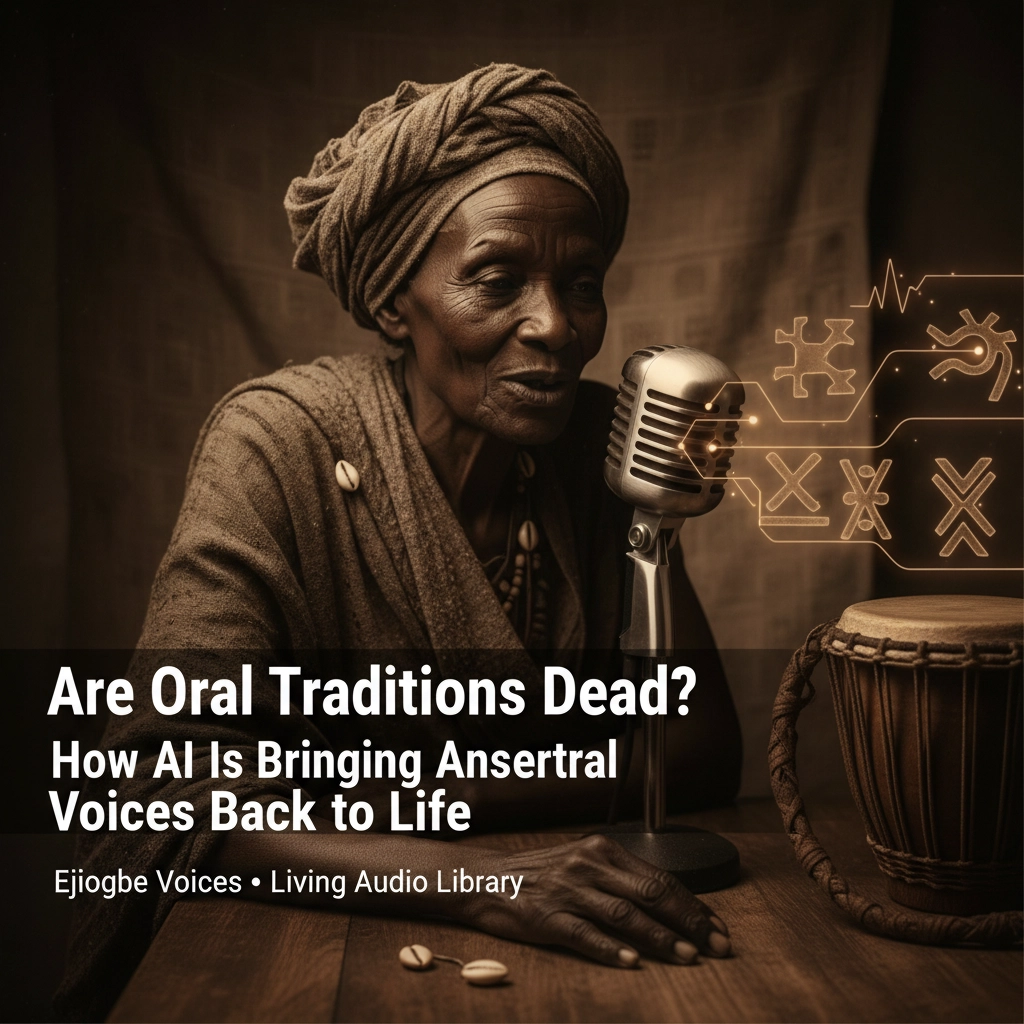
At Ejiogbe Voices, we've witnessed firsthand how AI can transform scattered audio recordings into interactive learning experiences. Our platform doesn't just store voices: it brings them to life, creating opportunities for ongoing dialogue between generations, even when elders are no longer physically present.
Consider the grandmother who records bedtime stories for her grandchildren living thousands of miles away. Traditional technology would simply play back her words. AI-enhanced systems can analyze her speech patterns, intonation, and cultural context, creating tools that help children not just hear the stories but understand the deeper meanings embedded within them.

The technology serves as a cultural amplifier, making it possible for a single fluent speaker to create learning resources that can benefit entire communities. Through our platform, families can upload precious recordings and transform them into comprehensive educational tools that adapt to different learning styles and preferences.
Breaking Down Barriers, Building Bridges
One of the most profound aspects of digital intergenerational transmission is its ability to overcome traditional barriers. Geographic distance, which once meant the end of regular language contact, now becomes merely an inconvenience. Time zones that separated family members now coordinate around scheduled language sessions. Physical limitations that prevented elders from traveling to share their knowledge now disappear behind the screen of a smartphone or computer.
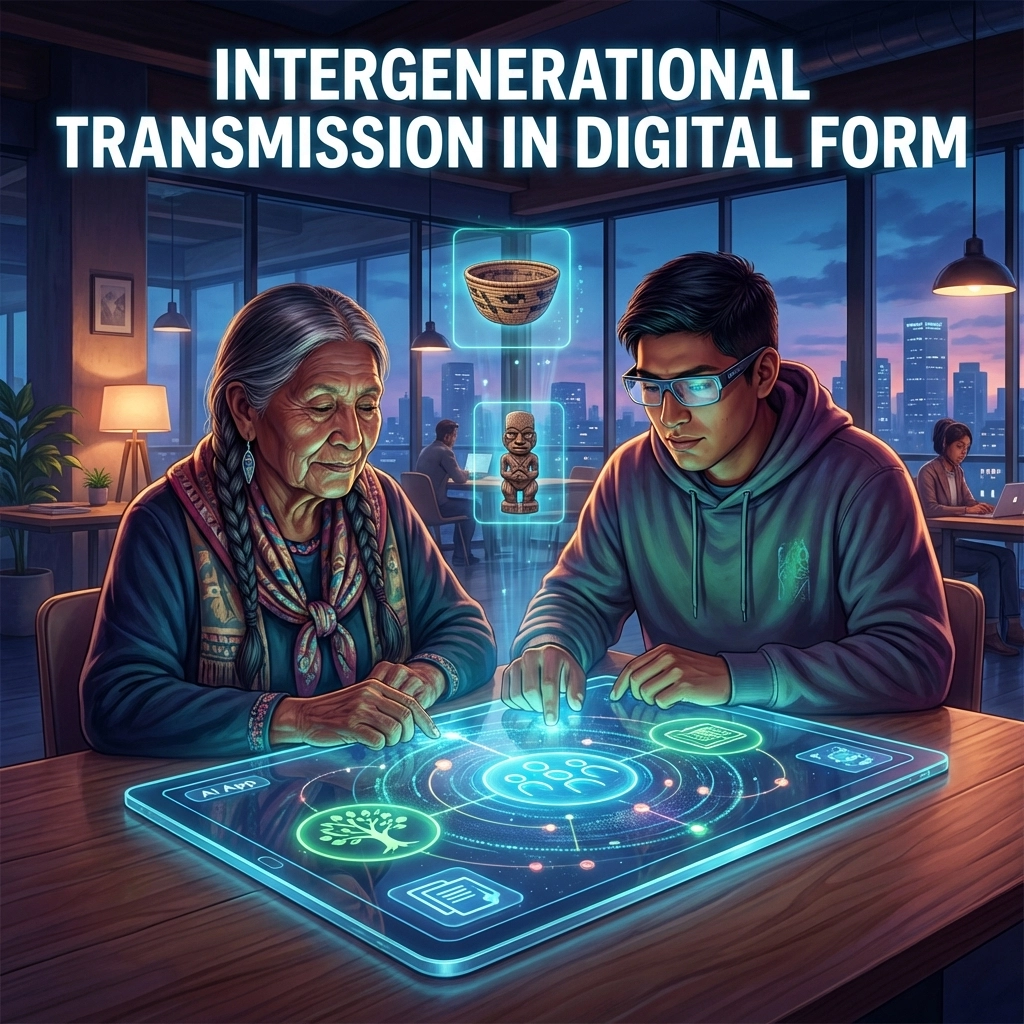
The research reveals something beautiful about this digital transformation: it's not one-directional. While we often think of elders passing down wisdom to younger generations, digital platforms create reciprocal relationships. Young people help their elders navigate technology, while elders share linguistic and cultural treasures. This exchange creates what researchers call "complementary competencies," where each generation contributes their unique strengths.
Grandchildren become technology guides, teaching their elders how to use recording equipment, navigate apps, and access digital archives. In return, grandparents share cooking instructions in native languages, explain the cultural significance of traditional phrases, and provide context that no textbook could ever capture.
The Reciprocal Nature of Digital Knowledge Exchange
This bidirectional flow transforms language preservation from a one-way transfer into a dynamic collaboration. When a teenager helps their grandmother upload traditional songs to our archive, both generations engage actively in the preservation process. The grandmother shares irreplaceable cultural content, while the teenager ensures it reaches a broader audience through digital channels.

We've observed families where children initially resist language learning but become enthusiastic participants when they realize they're helping preserve something precious for their own future children. The act of digitizing their grandparents' stories transforms passive receivers into active participants in cultural preservation.
This collaborative approach addresses one of the biggest challenges in traditional language transmission: the assumption that learning is passive. Digital platforms encourage interaction, questioning, and exploration. Children can replay difficult sections, ask clarifying questions through messaging systems, and even record their own attempts at pronunciation for feedback.
Preserving More Than Words: Cultural Context in Digital Form
Language carries more than vocabulary and grammar: it carries worldview, values, and entire ways of understanding reality. Digital intergenerational transmission excels at preserving this rich context in ways that traditional language learning materials often miss.
When an elder records a traditional story through our platform, they're not just sharing words. They're sharing the pauses that build suspense, the emphasis that conveys meaning, and the emotional inflections that bring characters to life. AI analysis can identify these subtle patterns and help learners understand not just what was said, but how it was said and why it matters.
Video recordings capture gestures, facial expressions, and environmental context that pure audio cannot convey. A prayer performed in a sacred space carries different energy than the same prayer recorded in a living room. Digital preservation allows us to maintain these crucial contextual elements that traditional written materials inevitably lose.

Our documentation section provides frameworks for capturing this rich context, helping families understand which elements to preserve alongside the linguistic content itself.
Challenges We Must Navigate
Despite its tremendous potential, digital intergenerational transmission faces significant challenges that require careful consideration and respectful solutions. Technical barriers remain substantial for many elder community members who didn't grow up with digital technology. The learning curve for recording equipment, file management, and platform navigation can feel overwhelming.
Privacy and cultural sensitivity present equally important concerns. Some traditional knowledge isn't meant for broad distribution, and digital platforms must respect these boundaries while still facilitating family-level transmission. Sacred prayers, ceremonial language, and clan-specific terms require careful handling and restricted access protocols.
Infrastructure limitations in many indigenous communities create additional obstacles. Reliable internet connections, modern recording equipment, and technical support services aren't universally available. These gaps can inadvertently exclude the communities that most need language preservation support.
The quality of digital recordings significantly impacts their educational value. Background noise, poor audio quality, and inconsistent recording practices can make preserved content difficult to use for learning purposes. Training and support become essential components of successful digital preservation projects.
The Future We're Building Together
Despite these challenges, the future of intergenerational transmission in digital form holds extraordinary promise. As technology becomes more accessible and user-friendly, barriers continue to decrease. Voice recognition software increasingly accommodates indigenous languages, making automated transcription and analysis possible for languages previously excluded from digital tools.

Artificial intelligence systems grow more sophisticated at understanding cultural context, enabling more nuanced preservation and teaching tools. Virtual and augmented reality technologies open possibilities for immersive language learning experiences that transport learners into culturally authentic environments.
The vision extends beyond simple preservation toward active revitalization. Digital platforms can connect isolated speakers, facilitate conversation practice, and create virtual communities around shared linguistic heritage. Children separated from their cultural communities by adoption or migration can reconnect with their linguistic roots through carefully curated digital resources.
At Ejiogbe Voices, we're committed to supporting communities as they navigate this digital transformation. Our mission centers on empowering families to become active participants in preserving their linguistic heritage while respecting cultural boundaries and community values.
The path forward requires collaboration between technology developers, community leaders, linguistic experts, and families themselves. Success depends on tools that serve community needs rather than imposing external solutions. It demands platforms that honor traditional knowledge systems while embracing digital possibilities.
Through respectful partnership and continued innovation, digital intergenerational transmission can ensure that the voices of our elders continue speaking to future generations, carrying forward not just words but entire worlds of wisdom, connection, and cultural identity.
The rivers of knowledge continue flowing, now enhanced by digital streams that carry ancestral voices across time and space, ensuring that no generation loses touch with the wisdom of those who came before.