

Something extraordinary is happening across African and Oceanic communities right now. While the world debates the ethics of AI and digitization, these communities are quietly leading one of the most important cultural preservation movements of our time: and they're doing it on their own terms.
The numbers tell part of the story. Internet users across Africa reached 570 million in 2022, doubling from just seven years earlier. But behind these statistics lies a deeper truth: communities are not just consuming digital technology: they're wielding it to safeguard their most precious inheritance.
The Mobile Revolution Meets Ancient Wisdom
In remote villages across Kenya, Tanzania, and Ghana, something beautiful is unfolding. Elders who have never owned a computer are learning to use smartphones to record centuries-old stories. Young people are discovering that the same devices they use for social media can become powerful vessels for ancestral voices.

The transformation is happening because mobile technology finally matches how these communities naturally share knowledge. Oral traditions have always been mobile, passed from person to person, place to place. Now, with Sub-Saharan Africa projected to reach 751 million unique mobile subscribers by 2030, the tools of preservation are in the hands of those who need them most.
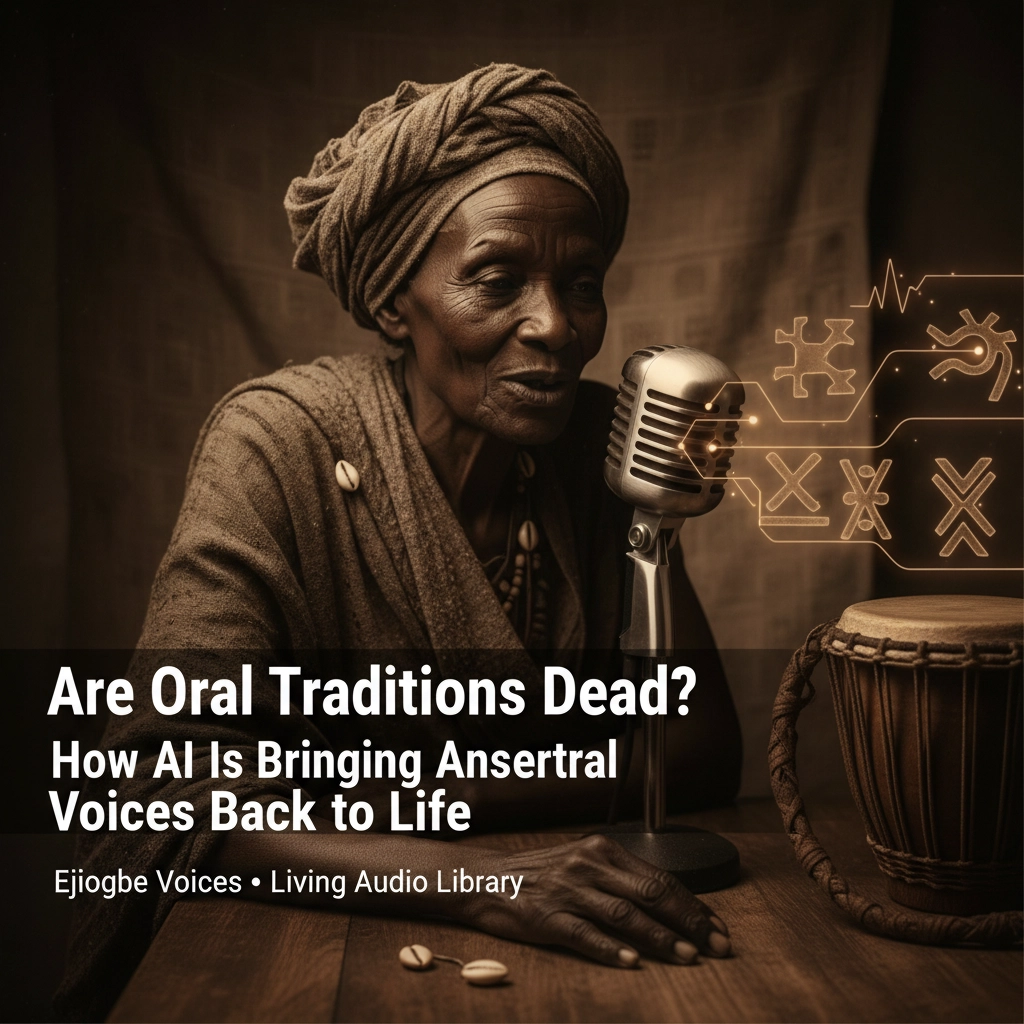
Marie Ndungu, a grandmother in rural Kenya, recently used her grandson's phone to record traditional Kikuyu healing songs that hadn't been sung in decades. "I thought these songs would die with me," she explains through a community volunteer. "Now my great-grandchildren in Nairobi can learn them too."
This isn't an isolated story. Across the continent, similar scenes are playing out in languages from Yoruba to Swahili, from Amharic to Zulu.
Oceanic Communities Chart Their Own Course
The Pacific Islands have their own digitization story, one equally compelling but distinctly different from their African counterparts. In Vanuatu, Fiji, and Solomon Islands, communities are racing against time to preserve languages that exist nowhere else on Earth.
The urgency is real. UNESCO lists many Pacific languages as critically endangered, with some having fewer than 100 speakers remaining. But rather than waiting for outside help, communities are creating their own solutions.

In Vanuatu, where over 100 indigenous languages coexist, village chiefs are partnering with local schools to create mobile recording studios. Young people move between islands with simple recording equipment, capturing elders' stories, traditional navigation knowledge, and ceremonial chants.
What makes this movement remarkable is its grassroots nature. These aren't projects initiated by universities or NGOs: they're community-led efforts driven by a profound understanding that their cultural wealth deserves the same protection as any World Heritage Site.
The Technology of Trust
The tools driving this boom are surprisingly simple. Communities aren't waiting for sophisticated AI transcription or expensive equipment. They're using what's available: smartphones, basic recording apps, and portable solar chargers.
But the real innovation lies in how these tools are being deployed. In many African communities, recording sessions have become ceremonial events. Families gather, multiple generations present, as elders share stories that bind past to future.
The process respects traditional protocols. Who can record what, when, and where follows ancestral guidelines. Some stories are meant for all ears; others remain within specific family lines or age groups. Technology serves tradition, not the other way around.

In Ghana's Ashanti region, the Queen Mother's court recently completed a year-long project to digitize royal histories dating back 300 years. Using simple recording devices, court historians captured not just the stories themselves, but the specific intonations and ceremonial language required for their proper telling.
"We are not just preserving words," explains one participating court historian. "We are preserving the rhythm of our ancestors' breath, the melody of their wisdom."
Community Ownership Changes Everything
What sets this digitization boom apart from previous preservation efforts is the question of ownership. These communities aren't just providing content for outside researchers: they're creating their own archives, controlled by their own protocols.
The economic implications are significant. Mobile technologies already contribute $144 billion to Africa's economy, representing 8.5% of GDP. But cultural digitization adds another layer of value: one that can't be measured in traditional economic terms.
Communities are discovering that their digitized traditions become powerful tools for education, identity building, and even economic development. Cultural tourism, traditional medicine documentation, and artisan training programs all benefit from these digital archives.
In Samoa, traditional navigation knowledge preserved through community recording projects is now being integrated into modern sailing courses, creating income opportunities for master navigators while ensuring their knowledge survives.
The Infrastructure of Heritage
The rapid expansion of digital infrastructure across both regions is enabling this cultural preservation boom. The 2Africa and Equiano subsea cable projects are bringing reliable internet to remote areas previously cut off from global networks.
But communities aren't waiting for perfect connectivity. They're creating mesh networks, sharing files through Bluetooth, and using offline storage solutions. The preservation happens first; the sharing follows when technology allows.

This distributed approach makes the archives more resilient. Instead of centralized databases that can be lost or damaged, knowledge exists in multiple copies across community members' devices. It's a backup system that mirrors how oral traditions have always survived: through redundancy and community responsibility.
Youth as Cultural Bridge-Builders
Perhaps the most encouraging aspect of this digitization boom is how it's bringing generations together. Young people are often the technical facilitators, but elders remain the knowledge holders. This collaboration is creating new forms of respect and understanding between age groups.
In many African communities, teenagers who seemed disconnected from traditional ways are now spending hours with grandparents, learning to operate recording equipment while absorbing ancestral wisdom. The technology creates a bridge where generational gaps once seemed unbridgeable.
Oceanic youth are showing similar enthusiasm. In Tonga, high school students have formed "digital preservation clubs" that partner with village elders to record traditional crafts, dances, and stories. What began as school projects have evolved into community institutions.
The Global Impact of Local Actions
These grassroots digitization efforts are creating ripple effects far beyond their immediate communities. Diaspora populations worldwide are reconnecting with heritage through these recordings. Children born in London, Toronto, or Sydney are learning ancestral languages from smartphone recordings made by great-grandparents they've never met.

The content is also contributing to global linguistic and anthropological knowledge in ways that respect community ownership. Rather than extractive research that benefits outside institutions, these projects keep control within communities while sharing appropriate knowledge with the world.
Challenges and Resilience
This digitization boom isn't without challenges. Power availability, device durability, and data storage all present ongoing obstacles. Many communities are developing creative solutions: solar charging stations, protective cases for devices, and community-managed backup systems.
The bigger challenge is often social. Some community members worry that digitization will somehow diminish the power of oral traditions. Others fear that sacred knowledge might be misused if it exists in digital form.
These concerns are being addressed through careful protocols that respect traditional knowledge management systems. Many communities are creating different access levels for different types of content, ensuring that sacred knowledge remains protected while educational content can be shared more widely.
The Future Is Already Here
What's happening across African and Oceanic communities represents more than technological adoption: it's cultural self-determination in action. These communities are not just preserving their past; they're ensuring their future by making ancestral wisdom accessible to coming generations.
The boom is accelerating. As mobile technology becomes more affordable and internet access expands, more communities are joining this preservation movement. But they're doing it on their own terms, with their own protocols, for their own purposes.
This is what respectful digitization looks like: communities as decision-makers, technology as servant to tradition, and preservation as an act of love rather than academic extraction. The unexpected heroes of this story are the grandmothers with smartphones, the teenagers bridging generations, and the community leaders who understood that the most advanced technology is worthless without wisdom to guide its use.
The digitization boom happening right now across these communities isn't just preserving the past: it's creating a future where ancestral voices and modern tools work in harmony, ensuring that the wisdom of generations remains alive, accessible, and owned by those who treasure it most.