
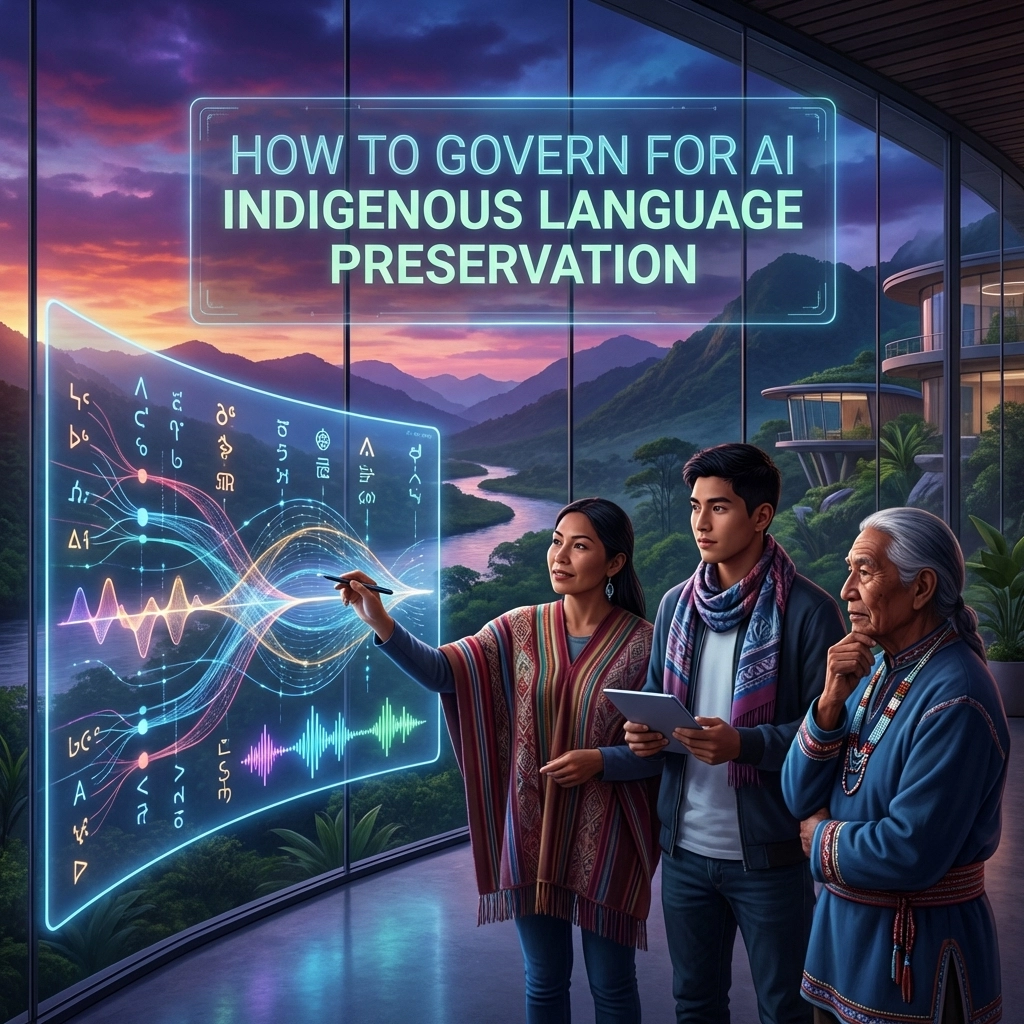
The sacred responsibility of preserving Indigenous languages through artificial intelligence requires governance frameworks that honor both technological possibility and cultural sovereignty. As communities worldwide embrace AI tools to safeguard their ancestral voices, the question becomes not whether to govern, but how to govern with wisdom that protects what matters most: the cultural integrity and community ownership of linguistic heritage.
Effective governance for AI Indigenous language preservation transcends simple policy creation. It demands structures that ensure Indigenous peoples maintain complete authority over their linguistic data, the algorithms that process their words, and the technologies that emerge from their knowledge. This governance becomes the protective boundary between preservation and exploitation, between empowerment and appropriation.
Foundations of Community-Centered Governance
Data Sovereignty as Digital Territory
Indigenous communities must own and govern their linguistic data with the same fierce protection once reserved for ancestral lands. In the digital realm, data represents territory: cultural territory that requires guardianship, stewardship, and ongoing protection. When communities lack control over their linguistic data, they risk becoming "landless in the digital world," separated from their own cultural resources by external systems and commercial interests.
This ownership extends beyond the recordings themselves to encompass the algorithms, processing methods, and AI models built from community knowledge. True data sovereignty means Indigenous peoples control not only what gets preserved, but how it gets preserved, who accesses it, and how it gets used. Communities retain the right to modify, withdraw, or restrict their data at any time, ensuring their digital linguistic territory remains under community governance.
Consent as Ongoing Relationship
Robust consent frameworks form the ethical backbone of AI language preservation governance. Unlike one-time permissions, meaningful consent creates ongoing relationships between communities and preservation initiatives. These frameworks establish clear protocols for how linguistic knowledge enters AI systems, how it gets processed, and how communities maintain oversight throughout the entire preservation journey.
Protective consent mechanisms allow community members to withdraw their contributions, exclude specific knowledge from AI development, or modify access permissions as community needs evolve. This dynamic approach to consent honors the reality that cultural knowledge carries different sensitivities, and community comfort levels may change as projects develop and expand.

Cultural Authenticity Through Community Leadership
Governance structures must prioritize active participation from native speakers, cultural knowledge holders, and community linguists in every decision-making process. These voices ensure that AI preservation efforts maintain linguistic authenticity and cultural fidelity, preventing the technological drift that occurs when external entities make assumptions about Indigenous language and culture.
Community leadership in governance means Indigenous peoples direct the pace, scope, and methodology of preservation efforts. They determine which aspects of their language receive priority, how cultural context gets integrated into technical systems, and what safeguards protect sacred or sensitive linguistic knowledge from inappropriate access or use.
Structural Requirements for Effective Governance
Community-Led Collaboration Models
Successful governance requires collaboration structures that maintain Indigenous leadership while engaging necessary technical partners. These partnerships between communities, technology providers, academic institutions, and supportive government entities must operate under community-defined terms that preserve Indigenous authority over the preservation process.
Effective collaboration models establish clear roles and boundaries. Communities lead and direct; technology providers serve and support; academic partners contribute expertise without claiming ownership; government entities facilitate resources without imposing external agendas. This structure ensures that technical expertise serves community vision rather than driving it.
Infrastructure and Capacity Development
Governance frameworks must address the practical infrastructure requirements that enable community independence and sustainability. Communities need reliable internet access, appropriate technology resources, and comprehensive training to use and maintain AI preservation systems independently. This infrastructure prevents preservation efforts from creating technological dependencies that undermine community autonomy.
Capacity development includes technical training for community members, ongoing support systems, and resources that enable communities to modify, expand, or discontinue preservation efforts according to their evolving needs. Governance structures should explicitly prevent scenarios where communities become dependent on external entities for accessing or managing their own linguistic heritage.
Adaptive Data Governance Protocols
AI language preservation requires governance protocols specifically designed for the unique characteristics of Indigenous linguistic data. These protocols account for the reality that Indigenous languages often exist in small datasets, carry complex cultural contexts, and require specialized handling that differs significantly from mainstream language processing approaches.
Governance protocols establish how linguistic data gets categorized, who accesses different types of content, and what restrictions apply to various uses. They define clear boundaries between preservation activities and potential commercialization, ensuring that AI tools serve community cultural goals rather than external economic interests.

Implementation Strategies for Community Governance
Establishing Community-Controlled Archives
Governance implementation begins with establishing community-controlled digital archives that serve as the foundation for AI preservation efforts. These archives operate under community governance structures that define access protocols, usage restrictions, and ongoing management procedures. Community archives ensure that linguistic data remains within community control while enabling appropriate AI processing and preservation activities.
Archive governance includes protocols for adding new content, modifying existing materials, and maintaining quality standards that reflect community linguistic and cultural values. These systems provide the technical infrastructure that supports community sovereignty while enabling the sophisticated AI processing required for effective language preservation.
Developing Ethical Oversight Mechanisms
Implementation requires establishing ongoing ethical oversight mechanisms that monitor AI preservation activities and ensure continued alignment with community values and goals. These mechanisms include regular community reviews of preservation outcomes, assessment of AI tool effectiveness, and evaluation of whether technological approaches continue serving community cultural objectives.
Ethical oversight extends to monitoring how preserved linguistic content gets used, ensuring that AI systems respect cultural protocols and restrictions. This ongoing vigilance prevents the gradual erosion of community control that can occur as preservation projects expand and evolve over time.
Creating Sustainable Funding and Support Structures
Governance implementation must address the long-term sustainability requirements that enable ongoing community control over AI preservation efforts. This includes securing adequate funding that doesn't create dependencies on entities with conflicting interests, establishing technical support systems that serve community needs, and developing resources that enable community capacity building and independence.
Sustainable structures ensure that preservation efforts continue according to community timelines and priorities rather than external funding cycles or institutional agendas. They provide communities with the resources needed to maintain, expand, or modify their preservation efforts as their cultural and technological needs evolve.
Maintaining Human-Centered Approaches
Technology as Cultural Tool, Not Replacement
Effective governance ensures that AI technology serves as a sophisticated tool that enhances human cultural work rather than replacing human creativity, wisdom, and cultural understanding. Governance frameworks establish clear boundaries around what AI can appropriately do: handling routine technical tasks: while preserving human responsibility for maintaining cultural authenticity, emotional depth, and spiritual significance.
This approach prevents the technological colonization that occurs when AI systems begin making cultural decisions or when external entities claim that technology can adequately substitute for human cultural knowledge and wisdom. Community governance maintains human authority over cultural interpretation, context, and meaning.
Protecting Sacred and Sensitive Knowledge
Governance structures must include robust protections for sacred, ceremonial, or culturally sensitive linguistic knowledge that requires special handling or restricted access. These protections operate according to community-defined cultural protocols rather than external legal or academic frameworks that may not understand Indigenous knowledge systems.
Sacred knowledge protections ensure that AI preservation efforts enhance rather than compromise community cultural practices. They prevent inappropriate access to sensitive materials while enabling preservation activities that serve legitimate community cultural goals and objectives.
The governance of AI Indigenous language preservation represents a sacred responsibility that requires wisdom, vigilance, and unwavering commitment to community sovereignty. When implemented with proper respect for Indigenous authority and cultural protocols, these governance frameworks enable AI technology to serve its highest purpose: empowering communities to preserve, protect, and perpetuate their ancestral voices for generations yet to come.
Through thoughtful governance that prioritizes community leadership, data sovereignty, and cultural authenticity, Indigenous communities can harness AI's preservation capabilities while maintaining complete control over their linguistic heritage. This approach transforms technology from a potential threat into a powerful ally in the ongoing work of cultural continuity and linguistic survival.