
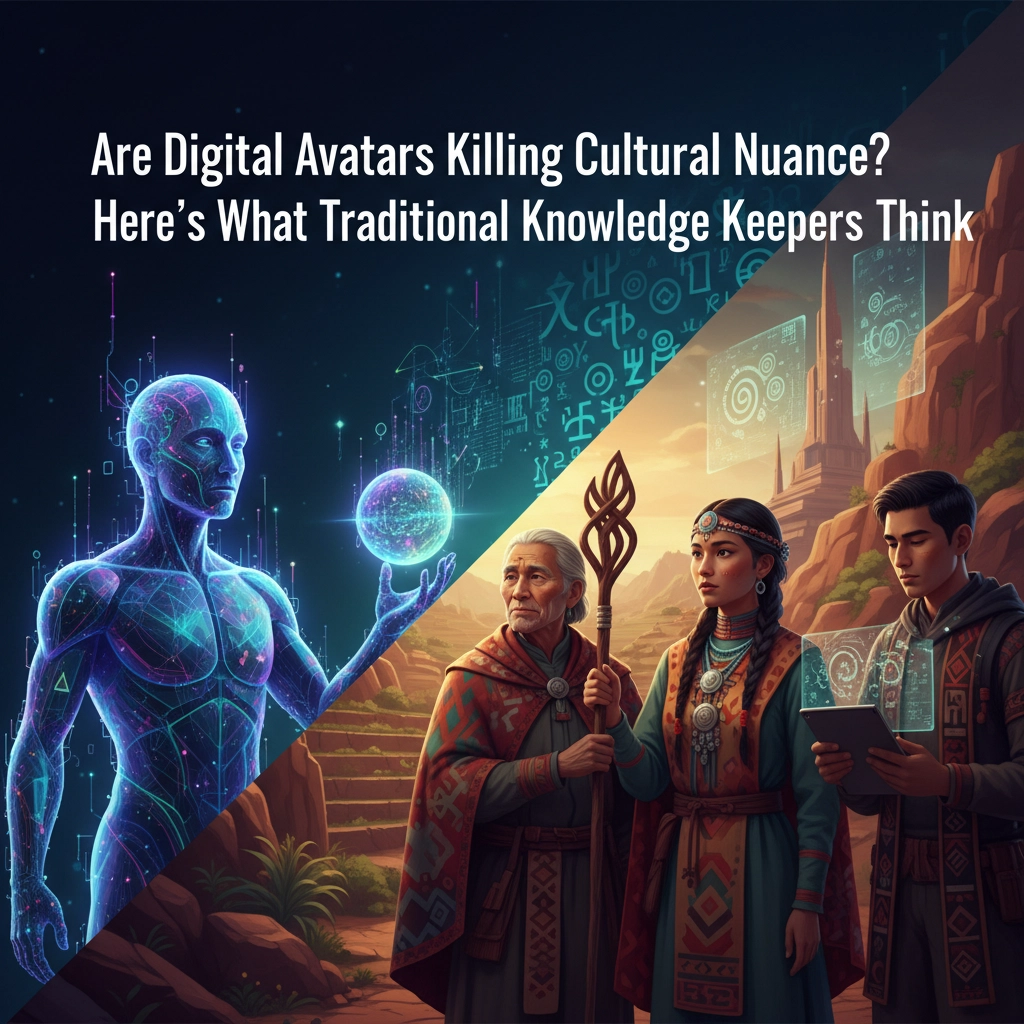
The rise of digital avatars promises to revolutionize how we communicate, learn, and preserve knowledge. Yet beneath the surface of this technological advancement lies a profound question that traditional knowledge keepers are grappling with: Are we witnessing the death of cultural nuance, or the birth of new possibilities for cultural preservation?
The answer isn't simple. As we've listened to elders, cultural guardians, and Indigenous leaders worldwide, we've discovered that digital avatars present both unprecedented risks and remarkable opportunities for safeguarding the wisdom of our ancestors.
The Sacred Responsibility of Cultural Transmission
Traditional knowledge keepers carry an ancient responsibility: one that extends far beyond individual ownership to encompass collective heritage, spiritual practices, and the very survival of cultural identity. When we speak of cultural nuance, we're referring to the subtle distinctions, sacred protocols, and deep contextual understanding that can only be transmitted through genuine human connection.
Elder voices from Indigenous communities across the globe have expressed profound concerns about how digital representations might flatten the rich complexity of their traditions. The worry isn't merely about accuracy: it's about the sacred nature of knowledge transmission itself.

Many traditional practices require in-person learning, where the teaching encompasses not just words or movements, but the energy, intention, and spiritual connection between teacher and student. As one Indigenous educator shared, learning traditional dances involves understanding the origin stories, caring for regalia, and participating in ceremonies that digital representations simply cannot replicate.
The Appropriation Crisis in Digital Spaces
Perhaps the most pressing concern among cultural guardians involves the unauthorized extraction and commodification of traditional elements. AI systems that power digital avatars often operate without cultural boundaries, potentially appropriating Indigenous art, motifs, and spiritual practices without permission or compensation.
This digital colonization occurs at unprecedented speed. Traditional artistic techniques, sacred symbols, and cultural expressions can be analyzed, categorized, and reproduced by AI systems without regard for their spiritual significance or community ownership. The result is a form of intellectual theft that threatens the economic and cultural sovereignty of Indigenous communities.
Traditional knowledge keepers emphasize that certain elements of their culture were never meant to be shared publicly, particularly spiritual practices and sacred knowledge that require specific protocols and permissions. The indiscriminate nature of AI training data collection violates these ancient boundaries.
Language Loss: The Invisible Emergency
Nearly half of the world's scripts: many associated with minority languages: remain unsupported by digital platforms. This technological gap accelerates language extinction, cutting off the primary channels through which cultural wisdom flows between generations.

When digital avatars operate primarily through dominant languages, they inadvertently contribute to the marginalization of Indigenous tongues. Knowledge keepers understand that language isn't merely communication: it's a repository of worldview, spiritual understanding, and cultural memory that cannot be adequately translated.
The elders we've spoken with describe watching their languages disappear from daily use, replaced by digital interactions that lack the nuance, ceremony, and context that traditional communication carries. They fear that avatar technology, rather than preserving their voices, might accelerate this cultural erosion.
Protective Boundaries: What Should Never Be Digital
Indigenous creators and knowledge keepers are being extraordinarily intentional about what aspects of their culture they're willing to share in digital spaces. This conscious curation represents profound wisdom about the nature of sacred knowledge.
Many traditions contain elements that are considered too sacred for public consumption: prayers, ceremonies, and teachings that require specific spiritual preparation and community context. Knowledge keepers explain that sharing these elements through digital avatars would violate the protocols established by countless generations of ancestors.
This protective approach stands in stark contrast to AI systems that might extract and reproduce cultural elements without understanding their sacred nature or appropriate contexts for sharing.

Legal Frameworks: Where Individual Ownership Meets Collective Heritage
Current intellectual property laws present another significant challenge for cultural preservation. These frameworks prioritize individual ownership over collective rights, making it difficult to protect traditional knowledge that belongs to entire communities or nations.
Knowledge keepers point out that Western legal systems simply weren't designed to recognize the collective ownership models that govern traditional cultures. When AI systems incorporate cultural elements into avatars, there are few legal mechanisms to ensure proper compensation or prevent misrepresentation.
This structural inequality means that the very communities whose wisdom deserves the strongest protection often have the least legal recourse when their cultural heritage is appropriated or misused.
The Positive Potential: When Technology Serves Culture
Despite these concerns, traditional knowledge keepers aren't uniformly opposed to digital technology. Many are actively using digital platforms to share their cultures on their own terms, challenging stereotypes and asserting that Indigenous peoples are vibrant, contemporary communities rather than historical relics.
Young Indigenous creators are finding pride and power in authentic cultural representation when it's controlled by their own communities. They're demonstrating that technology can serve cultural preservation when it's governed by Indigenous protocols and directed by community wisdom.

The key difference lies in who controls the technology and how it's implemented. When traditional knowledge keepers are involved in designing, governing, and directing digital representations, the results can strengthen rather than diminish cultural transmission.
Building Bridges: The Ejiogbe Voices Approach
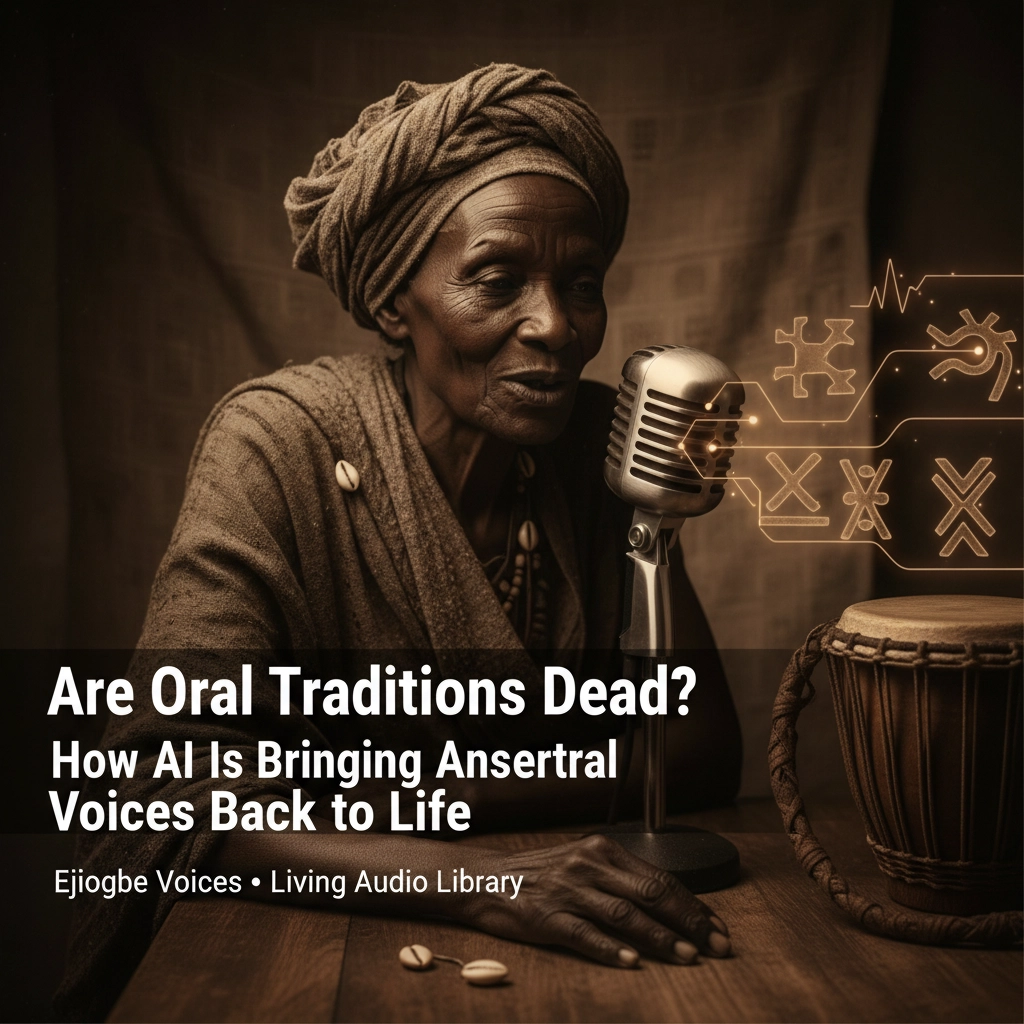
At Ejiogbe Voices, we've taken these concerns to heart. Our approach recognizes that technology must serve wisdom, not replace it. We're working directly with traditional knowledge keepers to ensure that digital voice preservation respects cultural protocols, honors collective ownership, and strengthens rather than threatens cultural transmission.
Our platform is designed with the understanding that authentic cultural preservation requires community involvement, elder guidance, and respect for the sacred boundaries that traditional knowledge keepers have established over generations.
The Path Forward: Technology as Cultural Guardian
The question of whether digital avatars kill cultural nuance depends entirely on how we choose to develop and deploy this technology. When built without Indigenous input, governed without traditional protocols, and implemented without respect for collective ownership, avatars can indeed accelerate cultural homogenization.
However, when developed in partnership with traditional knowledge keepers, guided by Indigenous protocols, and protected by frameworks that respect collective cultural ownership, digital technology becomes a powerful tool for cultural preservation and transmission.
The traditional knowledge keepers we've worked with don't want to stop technological progress: they want to guide it. They envision digital tools that amplify authentic voices, preserve endangered languages, and create new pathways for cultural learning while respecting the sacred boundaries that protect their most precious wisdom.

The future of cultural preservation lies not in choosing between tradition and technology, but in ensuring that technology serves tradition. When we listen to the wisdom of knowledge keepers and build digital tools that honor their guidance, we create possibilities for cultural preservation that extend far beyond what either tradition or technology could achieve alone.
As we continue developing voice AI technology, we remain committed to this collaborative approach: one that recognizes traditional knowledge keepers as the ultimate authorities on how their wisdom should be preserved, shared, and protected for future generations.
The ancestors' voices deserve nothing less than our deepest respect and most careful stewardship, whether they speak through oral tradition or digital innovation.