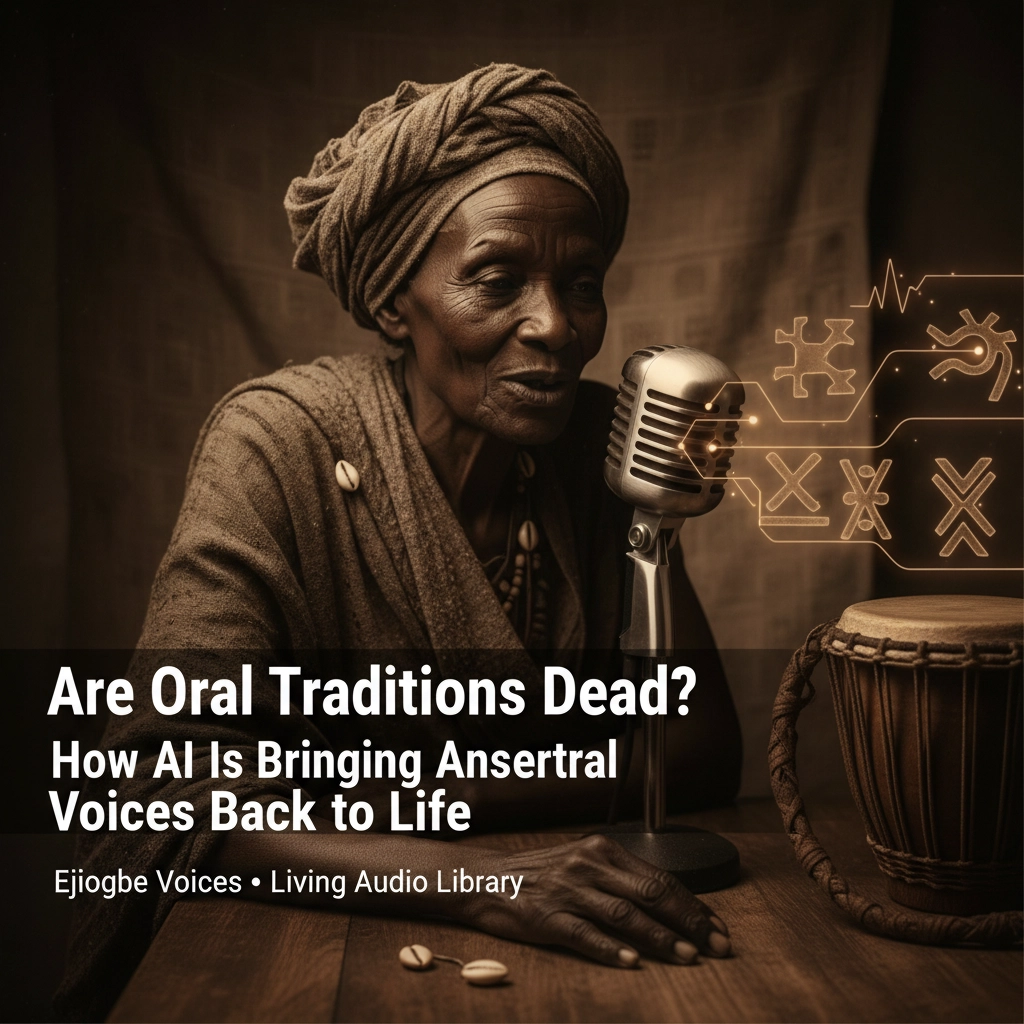


The word "revival" carries powerful emotional weight. It promises restoration, renewal, and the return of something precious that was lost. In the context of indigenous languages, this promise becomes deeply personal: touching the hearts of communities who have watched their ancestral tongues fade into silence. Yet too often, claims of language "revival" are built on foundations of hope rather than linguistic reality.
As we develop technology to preserve indigenous voices at Ejiogbe Voices, we've learned to approach these claims with both compassion and scrutiny. The difference between genuine preservation efforts and false revival promises can mean the difference between honoring ancestors and exploiting grief.
The Seductive Promise of Revival
When a language dies, the loss reverberates through generations. Families lose their connection to prayers their grandparents whispered. Traditional stories become trapped in translation. Cultural knowledge encoded in specific vocabulary disappears forever. Against this backdrop, any promise of "revival" sounds like a miracle.

This emotional vulnerability makes communities susceptible to inflated claims. Organizations seeking funding, researchers building careers, and technology companies marketing products all benefit from revival narratives that promise more than they can deliver. The marketing appeal of "bringing dead languages back to life" far exceeds the modest truth of "preserving what remains."
Academic institutions frequently contribute to this problem by framing their work in revival terms. Research grants flow more easily toward projects promising to "revive" languages than those that honestly acknowledge their preservation limitations. Conference presentations with titles like "Digital Revival of [Language X]" generate more interest than papers on "Limited Documentation Efforts."
What True Revival Would Require
Genuine language revival demands conditions that rarely exist. When Hebrew was revived as a spoken language, it required massive institutional support, a concentrated population of speakers, deliberate community commitment across generations, and most importantly: a substantial existing body of preserved literature and knowledge.
Consider what authentic revival needs:
- Living memory: Speakers or detailed documentation of how the language functioned in daily life
- Community will: Not just interest, but sustained commitment across multiple generations
- Institutional support: Schools, governance, media, and cultural organizations all operating in the target language
- Critical mass: Enough speakers to create natural language transmission between parents and children
Most "revival" projects lack these essential elements. They work with fragmentary documentation, limited community resources, and no clear pathway to creating fluent speakers who will raise children in the target language.
The Documentation Deception
Modern technology enables remarkable documentation efforts, but documentation should never be confused with revival. Machine learning can analyze language patterns from historical recordings. Digital archives can preserve thousands of hours of elder testimony. Translation tools can help communities access their linguistic heritage.

These are profound achievements that honor ancestral wisdom and create pathways for future learning. However, they do not constitute language revival. A comprehensive digital archive of a language is like a magnificent library: invaluable for research and cultural connection, but not equivalent to a living community of speakers.
When organizations claim their documentation efforts are "reviving" languages, they misrepresent both their achievements and their limitations. This deception ultimately disrespects the communities they claim to serve by offering false hope instead of honest partnership.
The AI Revolution Trap
Artificial intelligence has amplified both the possibilities and the dangers of false revival claims. AI language models can generate text that resembles historical language patterns. Voice synthesis can create speech that sounds like documented speakers. Translation algorithms can bridge gaps between fragments of preserved language.
These capabilities tempt some practitioners to make extraordinary claims. "AI brings extinct language back to life!" headlines generate impressive media coverage. Funding flows toward projects promising to use machine learning for language "resurrection." Communities desperate for cultural connection may embrace these promises without understanding their limitations.
The reality is more sobering. AI systems trained on limited historical data cannot capture the living complexity of human language use. They cannot replicate the cultural context that gives words their full meaning. They cannot restore the intergenerational knowledge transfer that makes languages truly alive.
At Ejiogbe Voices, we've chosen to be transparent about these limitations rather than exploit false hope for marketing advantage.
Community-Centered Truth-Telling
Honest language preservation work centers community voices in determining both goals and success metrics. Elders who remember fragments of ancestral languages are the most qualified to assess what preservation efforts can realistically accomplish. They understand the difference between cultural connection and linguistic fluency.

When community members say they want to "revive" their language, the response should be careful listening rather than immediate promises. What are they hoping to achieve? Do they want their children to become fluent speakers? Do they want to access cultural knowledge embedded in traditional language? Do they want to feel connected to ancestors through linguistic heritage?
These different goals require different approaches and different timelines. Some can be meaningfully addressed through documentation and preservation. Others may require decades of sustained community effort. Still others may need to be reimagined entirely.
Truthful practitioners help communities distinguish between these different aspirations rather than offering one-size-fits-all "revival" solutions.
The Preservation Alternative
Rather than false promises of revival, the field needs honest acknowledgment of what preservation can accomplish. Preservation work creates bridges between past and future, not resurrection of the dead. It honors ancestral wisdom while accepting the reality of linguistic loss.
Effective preservation efforts focus on achievable goals:
- Documentation: Recording and analyzing available language materials with community partnership
- Access: Creating systems that help community members connect with their linguistic heritage
- Education: Developing resources that teach about the language within its cultural context
- Transmission: Supporting whatever level of intergenerational sharing remains possible
These goals may seem modest compared to revival fantasies, but they represent real value for communities. A well-designed preservation system can help young people access traditional stories, understand ceremonial language, and feel connected to ancestral voices across time.
Technology's Proper Role
Digital tools excel at preservation tasks when designed with appropriate humility. Audio archives can capture elder voices with unprecedented clarity. Machine learning can identify patterns in historical documents. Mobile applications can make preserved materials accessible to community members worldwide.

The key is positioning technology as a tool for human community goals rather than a magical solution to linguistic loss. Our archive systems are designed to support community leadership rather than replace it. Documentation tools help preserve what elders choose to share, not extract information for external purposes.
This approach requires ongoing community consent and collaboration. Elders remain the primary authorities over their linguistic heritage. Technology serves their vision rather than imposing external revival fantasies.
Moving Beyond False Hope
The path forward requires courage to speak honestly about both possibilities and limitations. Communities deserve partners who offer realistic assessment rather than inflated promises. Funders should reward truth-telling over marketing hype. Researchers must resist the academic incentives that favor revival narratives over preservation realities.
This doesn't mean abandoning hope or minimizing the value of preservation work. Documented languages can provide profound cultural connection across generations. Archived elder voices can teach traditional knowledge to future community members. Digital tools can make linguistic heritage accessible in ways our ancestors never imagined.
These achievements deserve celebration on their own merits, without false revival claims that ultimately disappoint and exploit. When we honor what preservation can actually accomplish, we create space for authentic community healing and cultural continuity.
The ancestors deserve nothing less than our complete honesty about both our capabilities and our limitations. False revival promises dishonor their memory while exploiting their descendants' grief. True preservation work requires the courage to tell the truth: about what we can save, what we cannot restore, and what communities need to heal.