
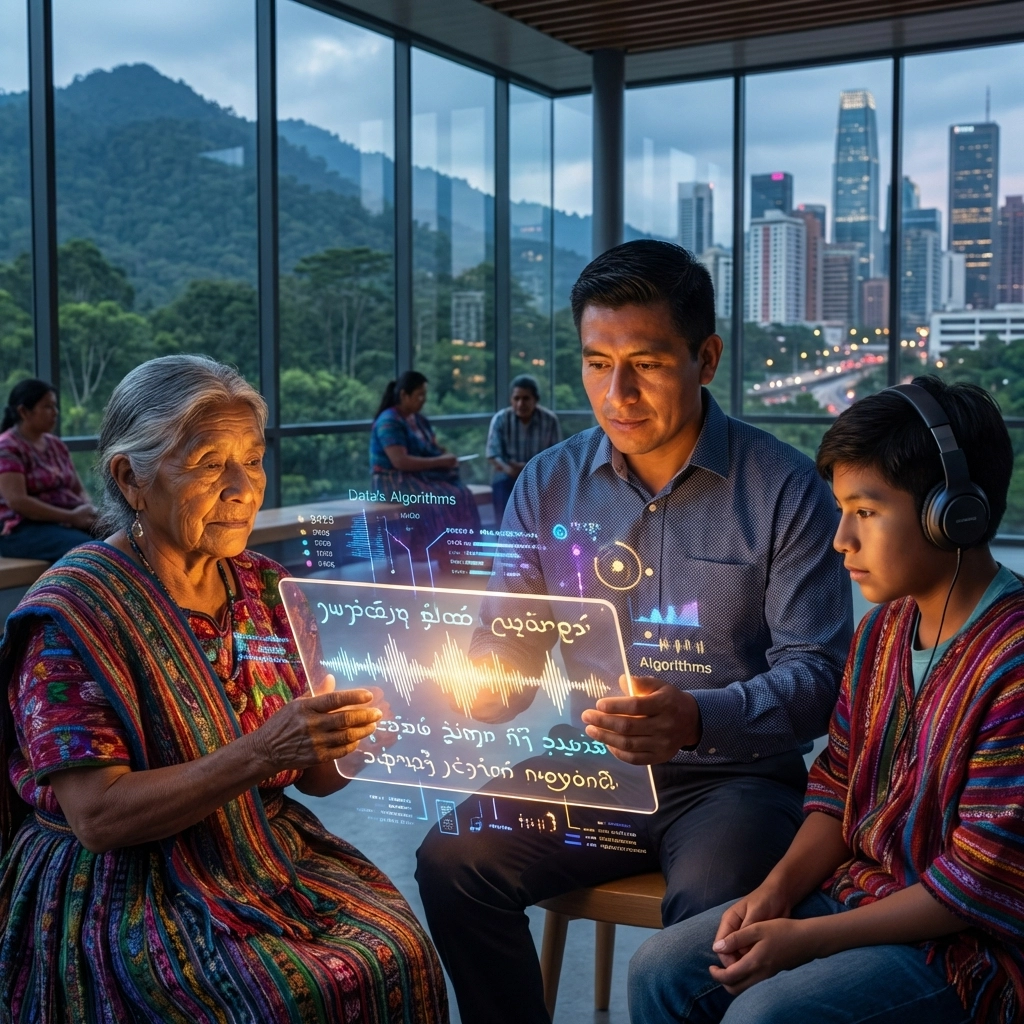
When we speak of preserving indigenous languages through artificial intelligence, we enter sacred territory. Each word, each intonation, each cultural nuance carries the weight of generations. The question of what to collect for AI indigenous language preservation is not merely technical: it's deeply spiritual, cultural, and inherently tied to the dignity of communities whose voices have been silenced for too long.
The data we gather becomes the foundation upon which AI systems learn to understand, interpret, and help preserve these precious linguistic treasures. But not all data is created equal, and not all collection methods honor the sacred trust placed in us by indigenous communities.
The Foundation: High-Quality Audio Recordings
Audio recordings form the heartbeat of any AI language preservation project. These aren't just sound files: they're captured moments of cultural transmission, containing the rhythm, melody, and soul of a language that has survived centuries of attempted erasure.
Elder Voices and Native Speakers
The most valuable audio comes from fluent native speakers, particularly elders who carry the deepest knowledge of traditional pronunciation, intonation patterns, and cultural context. Recent work with Hawaiian language preservation utilized dozens of hours of carefully labeled audio from native speakers, combined with millions of pages of digitized text, to train effective automatic speech recognition models.
When collecting audio, we must capture:
- Natural conversation patterns
- Traditional storytelling sessions
- Ceremonial language and prayers
- Daily conversational exchanges
- Different speaking styles (formal, informal, narrative)

Technical Quality Standards
Each recording must meet specific technical standards to be useful for AI training. High-quality audio captures the subtle tonal variations, consonant clusters, and phonological features that make each indigenous language unique. Many indigenous languages rely heavily on tone, vowel harmony, and contextual pronunciation: features often absent in dominant languages.
Poor audio quality can cause AI systems to miss these crucial linguistic elements, potentially creating models that misrepresent or oversimplify the language's complexity.
Written Materials and Textual Resources
While oral tradition often takes precedence in indigenous communities, written materials provide crucial support for AI language models. These texts help AI systems understand grammatical structures, vocabulary relationships, and semantic patterns.
Historical Documents and Literature
Digitized newspapers, historical documents, and traditional literature offer rich linguistic data. The Hawaiian project successfully incorporated millions of pages of digitized Hawaiian newspaper text, creating a comprehensive textual foundation for their AI models.
Modern Community Writing
Contemporary writing from community members: including social media posts, letters, educational materials, and creative works: captures how languages evolve and adapt to modern contexts. This living language data helps AI systems understand current usage patterns alongside traditional forms.
Translation Pairs
Parallel translations between indigenous languages and dominant languages create powerful learning resources for AI systems. The groundbreaking Nüshu preservation project at Dartmouth began with just 500 carefully annotated sentence pairs linking Chinese and Nüshu script, demonstrating that even minimal high-quality data can enable significant AI learning.

Cultural Context and Metadata
Beyond the raw linguistic data lies equally important contextual information that gives meaning and appropriate usage guidelines to the collected materials.
Speaker Demographics and Background
Each piece of audio or text should include metadata about:
- The speaker's tribal affiliation and regional dialect
- Age and language learning background
- Recording circumstances and setting
- Relationship to the cultural content being shared
- Permission levels for usage and sharing
Cultural Significance Markers
Certain words, phrases, or linguistic elements carry special cultural significance. Collections must include clear markers identifying:
- Sacred or ceremonial language requiring special handling
- Gender-specific linguistic elements
- Age-appropriate content
- Seasonal or contextual usage restrictions
- Community-specific protocols
Linguistic Feature Documentation
Indigenous languages often contain complex grammatical and phonological features that require special documentation:
- Tone marking and pitch patterns
- Complex consonant clusters
- Vowel harmony systems
- Evidentiality markers
- Aspect and temporal systems unique to the language

Community Validation and Expert Review
The most successful AI language preservation projects prioritize community involvement and expert validation throughout the collection process.
Elder and Expert Annotation
Having community linguists and native speakers review and annotate collected materials ensures accuracy and cultural appropriateness. The most comprehensive Nüshu collection used expert-validated resources with corresponding translations, significantly improving the quality and cultural authenticity of the resulting AI models.
Community-Sourced Contributions
Collaborative platforms that enable community members to contribute content create sustainable collection processes while building engagement. These Wikipedia-inspired approaches transform documentation from an extractive process into a collective cultural preservation effort.
Multiple Validation Levels
Each piece of collected data should pass through multiple validation stages:
- Technical quality assessment
- Linguistic accuracy review
- Cultural appropriateness evaluation
- Community permission verification
- Usage restriction documentation
Multimodal Resources for Comprehensive Learning
Modern AI systems benefit from multimodal data that combines audio, video, text, and visual elements to create richer learning environments.
Video Documentation
Video recordings capture non-verbal communication elements crucial to many indigenous languages:
- Hand gestures and body language
- Facial expressions that modify meaning
- Cultural contexts and settings
- Traditional practices and ceremonies
- Sign language elements integrated with spoken language
Visual Cultural Materials
Traditional art, symbols, and cultural artifacts provide visual context that helps AI systems understand cultural concepts embedded in language:
- Traditional artwork and symbols
- Ceremonial objects and their names
- Geographic and environmental references
- Cultural practices and their linguistic descriptions

Technical Considerations for AI Training
The format and structure of collected data significantly impact AI training effectiveness and long-term preservation goals.
Data Format Standards
Using standardized, open-source formats ensures long-term accessibility and interoperability:
- Uncompressed audio formats for archival storage
- Standardized text encoding systems
- Consistent metadata schemas
- Version control for iterative improvements
Annotation Consistency
Consistent annotation practices across all collected materials enable effective AI training:
- Standardized transcription conventions
- Uniform tagging systems for linguistic features
- Consistent cultural context markers
- Regular quality assurance protocols
Scalability Planning
Collection systems must accommodate growth and community participation:
- Flexible database structures
- Community contribution interfaces
- Quality control workflows
- Rights management systems
Ethical Collection Frameworks
Every collection decision must center indigenous community rights, cultural protocols, and long-term preservation goals.
Community Ownership and Control
Indigenous communities must maintain ownership and control over their linguistic data. Collection frameworks should clearly establish:
- Community data sovereignty rights
- Decision-making authority for usage
- Benefit-sharing agreements
- Revocation and deletion protocols
Informed Consent Processes
Transparent consent processes ensure community members understand how their contributions will be used:
- Clear explanations of AI training purposes
- Specific usage restriction options
- Ongoing consent verification
- Easy withdrawal processes
The path forward in AI indigenous language preservation requires us to collect not just data, but relationships: connections between words and meaning, between speakers and communities, between past wisdom and future possibilities. Through careful, respectful collection practices, we can ensure that AI systems serve as bridges rather than barriers, connecting generations and preserving the irreplaceable linguistic treasures that make our world infinitely richer.
When we approach this work with proper reverence and community partnership, the data we collect becomes more than training material: it becomes a living testament to the resilience and beauty of indigenous voices that refuse to be silenced.