
In our digital age, we're witnessing an unprecedented loss of institutional memory. Senior executives retire, taking decades of hard-earned wisdom with them. Organizational knowledge sits trapped in email chains and forgotten file folders. Meanwhile, African oral traditions have successfully preserved complex cultural knowledge, historical narratives, and collective wisdom across countless generations: without a single written document.
These time-tested methods offer profound lessons for modern boardrooms struggling to maintain continuity through leadership transitions, economic upheavals, and rapid organizational change. By examining how African societies have safeguarded their heritage through storytelling, mentorship, and community engagement, we can develop more effective strategies for preserving the institutional wisdom that drives organizational success.
Lesson 1: Designate Custodians of Institutional Memory
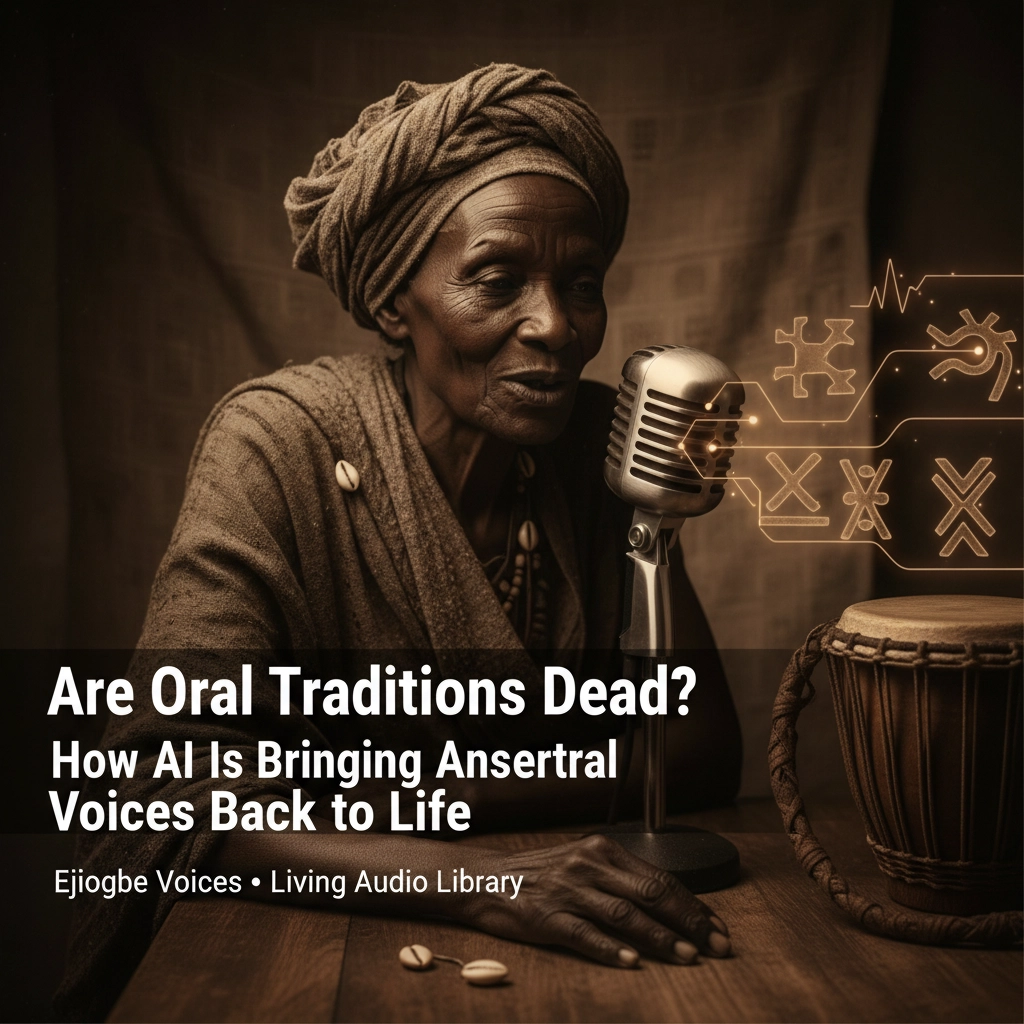
African oral traditions rely on specially trained griots: professional storytellers who serve as living libraries of cultural knowledge. These master narrators begin their training in childhood, developing extraordinary abilities to preserve history, genealogies, and cultural values through spoken word. They function simultaneously as historians, educators, and performers, carrying the responsibility of maintaining collective memory for entire communities.
Modern organizations can adopt this model by creating formal roles for institutional memory keepers. Rather than hoping knowledge transfers happen organically, designate senior leaders as official custodians of organizational wisdom. These individuals should possess deep historical knowledge, exceptional communication skills, and genuine passion for mentoring emerging talent.

Consider establishing "Corporate Griot" positions: experienced executives whose primary responsibility involves documenting, sharing, and transferring critical institutional knowledge. These leaders would conduct regular wisdom-sharing sessions, create narrative archives of significant organizational moments, and develop systematic mentorship pathways that ensure crucial insights pass from one generation of leadership to the next.
The key lies in treating institutional memory as a specialized skill requiring dedicated resources, rather than assuming it will naturally preserve itself through casual conversations and annual reports.
Lesson 2: Transform Data Into Narrative
African folktales, epics, and praise poetry demonstrate the power of embedding wisdom within compelling stories. Rather than presenting abstract information, these traditions wrap crucial knowledge in memorable narratives that engage listeners emotionally and create lasting impressions. Stories become vehicles for transmitting complex cultural values, historical lessons, and practical guidance.
Boardrooms should cultivate storytelling cultures where significant decisions, leadership lessons, and organizational history are communicated through narrative rather than spreadsheets and bullet points. When leaders share stories about overcoming past challenges, the values that guided difficult decisions, or how organizational culture evolved through crisis, this information becomes far more memorable and transferable than abstract policies.
Encourage executives to develop signature stories that illustrate core organizational principles. These narratives should be shared consistently in meetings, onboarding sessions, and leadership development programs. Stories create emotional connections that make institutional wisdom stick with employees throughout their careers, transforming dry corporate knowledge into living organizational culture.
Lesson 3: Distill Complexity Into Memorable Wisdom
African proverbs exemplify how profound insights can be compressed into concise, powerful phrases. These metaphorical expressions encapsulate cultural values and serve as practical tools for daily decision-making. A single proverb can guide behavior across countless situations while remaining easy to remember and share.
Organizations should develop institutional maxims that distill organizational philosophy into memorable language. Rather than lengthy mission statements that few employees can recite, create concise wisdom statements that capture essential decision-making principles and cultural values.

These organizational proverbs might address how the company approaches innovation, handles ethical dilemmas, or prioritizes competing interests. When leaders consistently reference these phrases in communications and decision-making moments, they become embedded in the organizational DNA, providing reliable guidance even when formal policies fall short.
The goal is creating language that employees can easily remember, share, and apply across diverse situations: transforming complex institutional knowledge into accessible wisdom that travels with your team members throughout their careers.
Lesson 4: Employ Multiple Transmission Channels
African oral traditions don't rely on single methods of knowledge transfer. They utilize rhythm, music, visual performance, audience participation, and repetition to reinforce learning. This multi-sensory approach ensures information reaches different learning styles while creating multiple pathways for memory formation.
Modern institutions should similarly employ diverse channels for wisdom preservation rather than depending solely on written documentation. Combine executive video testimonies with interactive workshops, mentoring conversations with experiential learning opportunities, and formal training programs with informal storytelling sessions.
Consider developing leadership podcasts where retiring executives share career insights, creating immersive simulation exercises that recreate historical organizational challenges, and establishing regular town halls where institutional stories are shared and discussed. Different formats allow wisdom to be adapted to contemporary challenges while preserving core principles.
The key is recognizing that institutional knowledge exists in multiple forms: explicit expertise, tacit understanding, relationship networks, and cultural intuition: and each requires different preservation and transmission strategies.
Lesson 5: Foster Collective Ownership of Knowledge
In African societies, oral literature belongs to entire communities rather than individual authors. This collective ownership creates social cohesion and ensures knowledge survival beyond any single storyteller. Everyone participates in preserving and transmitting cultural wisdom, making the entire community responsible for maintaining their shared heritage.
Boardrooms should cultivate cultures where institutional wisdom is viewed as collective organizational property rather than residing exclusively with individual leaders. When knowledge is shared broadly, discussed openly, and valued as part of organizational identity, employees feel invested in preserving and transmitting it.
Create systems where institutional stories are gathered from multiple perspectives, not just senior leadership. Encourage cross-departmental knowledge sharing sessions, establish mentorship networks that span organizational levels, and develop recognition programs that celebrate employees who contribute to institutional memory preservation.
This approach transforms institutional wisdom from siloed expertise into shared cultural capital, ensuring organizational knowledge survives leadership transitions and continues evolving through collective stewardship.
Implementing Ancient Wisdom in Modern Boardrooms
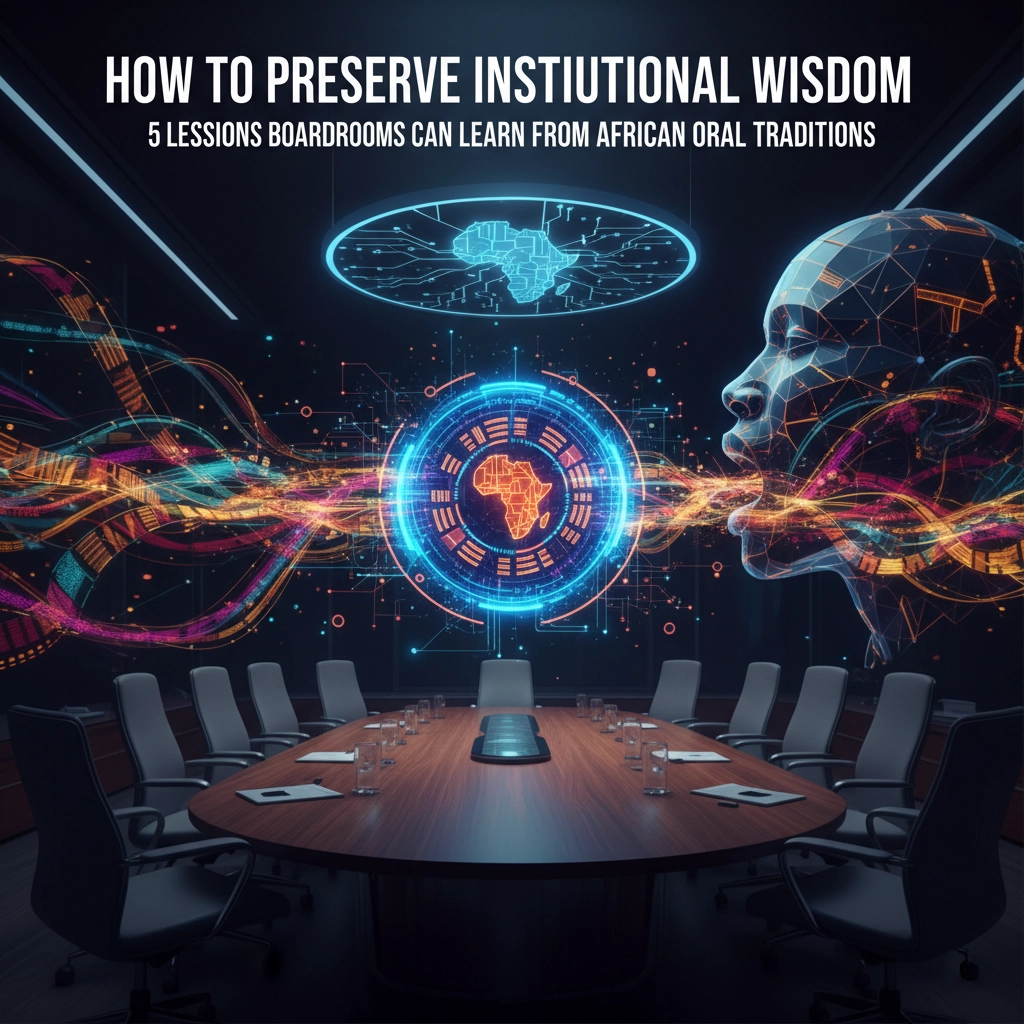
Effective institutional wisdom preservation combines all five principles: designate knowledge custodians, use narrative as primary transmission method, distill principles into memorable language, employ multiple engagement channels, and foster collective ownership of organizational knowledge.
Organizations that weave these elements together create cultures that naturally preserve and transmit wisdom across leadership transitions and generational shifts. Like African oral traditions that have maintained complex knowledge systems for centuries, companies can develop resilient institutional memory that strengthens rather than weakens over time.
The path forward requires intentional commitment to treating organizational wisdom as a strategic asset worthy of systematic preservation. By learning from traditions that have successfully maintained collective knowledge across countless generations, we can ensure our institutions remain grounded in hard-earned wisdom while adapting to future challenges.
At Ejiogbe Voices, we're building technology that bridges ancient wisdom and modern innovation, helping organizations and communities preserve the voices that matter most. Because authentic knowledge: whether traditional or institutional: deserves to be heard, honored, and passed forward to future generations.