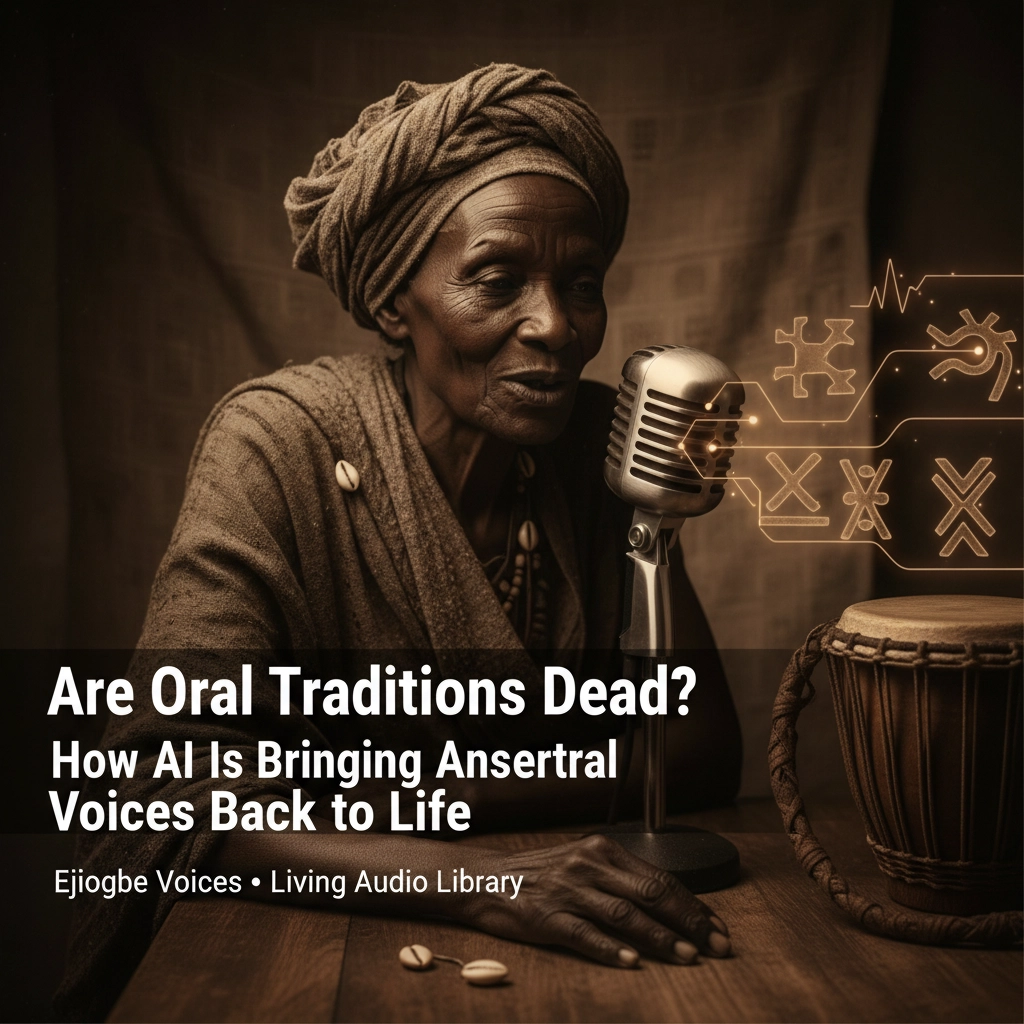

When we encounter sacred voices from our ancestors, we stand at a crossroads of profound responsibility. Do we honor these linguistic treasures through careful preservation and authentic playback? Or do we allow technology to transform ancestral wisdom into casual chatbot interactions that strip away their cultural gravity and spiritual significance?
The distinction between ancestral language playback and chatbot roleplay represents more than a technical choice: it embodies our fundamental approach to cultural stewardship in the digital age. At Ejiogbe Voices, we believe ancestral voices deserve reverence, not reimagination.
The Sacred Nature of Ancestral Recordings
Historical audio recordings of indigenous languages captured on wax cylinders and early recording devices represent some of humanity's most precious cultural artifacts. These recordings often contain the only known sound documentation of languages, prayers, teachings, and traditional knowledge that have been passed down through generations.

When researchers at the Library of Congress first began digitizing these fragile cylinders, they discovered something remarkable: voices speaking languages that had been silent for decades, elders sharing wisdom that had never been written down, and musical traditions that existed nowhere else in the world. Each cylinder held not just sound waves, but the breath and intention of ancestors who trusted their voices to be preserved for future generations.
These recordings serve as bridges between past and present, carrying the authentic cadence, pronunciation, and emotional depth that can never be replicated through artificial recreation. They represent living documents of cultural identity, spiritual practice, and community knowledge.
The Problem with Chatbot Roleplay
Modern AI systems increasingly blur the line between preservation and performance. While large language models can generate text that mimics indigenous storytelling patterns, and voice synthesis technology can create artificial speech in endangered languages, these approaches fundamentally misunderstand the nature of ancestral knowledge.
Chatbot roleplay reduces sacred teachings to conversational exchanges, transforming profound spiritual guidance into casual Q&A sessions. When AI systems attempt to "speak as" ancestors or elders, they commodify voices that were meant to be preserved, not replicated. This approach treats ancestral wisdom as raw material for synthetic generation rather than honoring it as complete, sacred expression.
The consequences extend beyond technical concerns. When communities encounter AI-generated versions of their ancestral voices, the emotional and spiritual impact can be devastating. Imagine hearing what appears to be your grandmother's voice sharing traditional knowledge she never actually recorded, or encountering an AI system that claims to channel ancestral spirits through synthesized speech.

These synthetic interactions create false memories, dilute authentic cultural transmission, and undermine the trust communities place in digital preservation efforts. They transform precious cultural resources into entertainment or educational content without community consent or contextual understanding.
The Technology of Reverent Preservation
Authentic ancestral language playback requires sophisticated yet respectful technology that prioritizes preservation over generation. Researchers have developed non-invasive optical scanning technology that extracts audio from deteriorating wax cylinders without physically touching these fragile artifacts.
This revolutionary approach, developed by Lawrence Berkeley National Laboratory physicists Carl Haber and Earl Cornell, uses light-based methods to "read" sound grooves rather than subjecting century-old materials to mechanical playback. The technique can recover audio even from damaged or broken cylinders, revealing voices that seemed lost forever.
Once scanned, digital files undergo careful restoration using specialized systems like the Archéophone cylinder playback machine and CEDAR (Computer Enhanced Digital Audio Restoration System). These tools remove deterioration caused by mold, decay, and environmental damage while preserving the authentic characteristics of the original recordings.
The Library of Congress's Ancestral Voices project exemplifies respectful preservation by offering three versions of each restored file: a best-quality enhanced recording, a flat transfer showing original quality, and copies of earlier preservation attempts. This approach allows communities to understand the restoration process while choosing the audio quality that best serves their cultural needs.

Community-Centered Playback Systems
Effective ancestral language playback systems prioritize community control over technological capability. Rather than creating AI systems that generate new content based on historical patterns, these platforms focus on making authentic recordings accessible, searchable, and culturally contextual.
At Ejiogbe Voices, our approach centers on permissioned access layers that respect community protocols around sacred knowledge. Some recordings may be available to all community members, while others require elder approval or ceremonial context for access. Our archive system ensures that ancestral voices remain under community control rather than becoming open datasets for AI training.
We provide multiple playback options that honor different community needs: high-quality restoration for language learning, original transfer quality for research purposes, and contextual metadata that preserves the cultural circumstances surrounding each recording. This approach treats each ancestral voice as a complete cultural artifact rather than raw material for synthetic generation.
Ethical Guidelines for Ancestral Voice Technology
Working with ancestral language recordings requires explicit ethical frameworks that prioritize community consent and cultural appropriateness. Our guidelines at Ejiogbe Voices reflect years of consultation with indigenous communities, language revitalization experts, and cultural preservation specialists.
Consent and Authority: Every ancestral recording in our system requires explicit community consent for access and use. We recognize that posthumous consent involves complex cultural protocols that vary between communities, and we defer to established community authorities rather than making unilateral decisions.
Contextual Preservation: Ancestral voices exist within cultural contexts that inform their meaning and appropriate use. Our playback systems preserve metadata about ceremonial significance, seasonal restrictions, gender-specific knowledge, and other cultural protocols that govern access to traditional teachings.

Non-Generative Approach: We never use ancestral recordings to train AI systems that generate new content. Our technology focuses exclusively on preservation, restoration, and respectful playback of authentic historical materials.
Community Ownership: Indigenous communities maintain complete ownership over their ancestral recordings. Our platform serves as a technological tool rather than a cultural authority, ensuring that communities retain control over their linguistic and spiritual heritage.
The Future of Ancestral Language Access
As digital preservation technology continues advancing, we face critical choices about how to handle the growing archive of ancestral voice recordings. The path forward requires balancing technological capability with cultural responsibility, ensuring that innovation serves community needs rather than external interests.
Advanced Restoration Techniques: New signal processing methods can recover increasingly degraded recordings, revealing ancestral voices that seemed permanently lost. These technical advances must be paired with community guidance about appropriate use and access protocols.
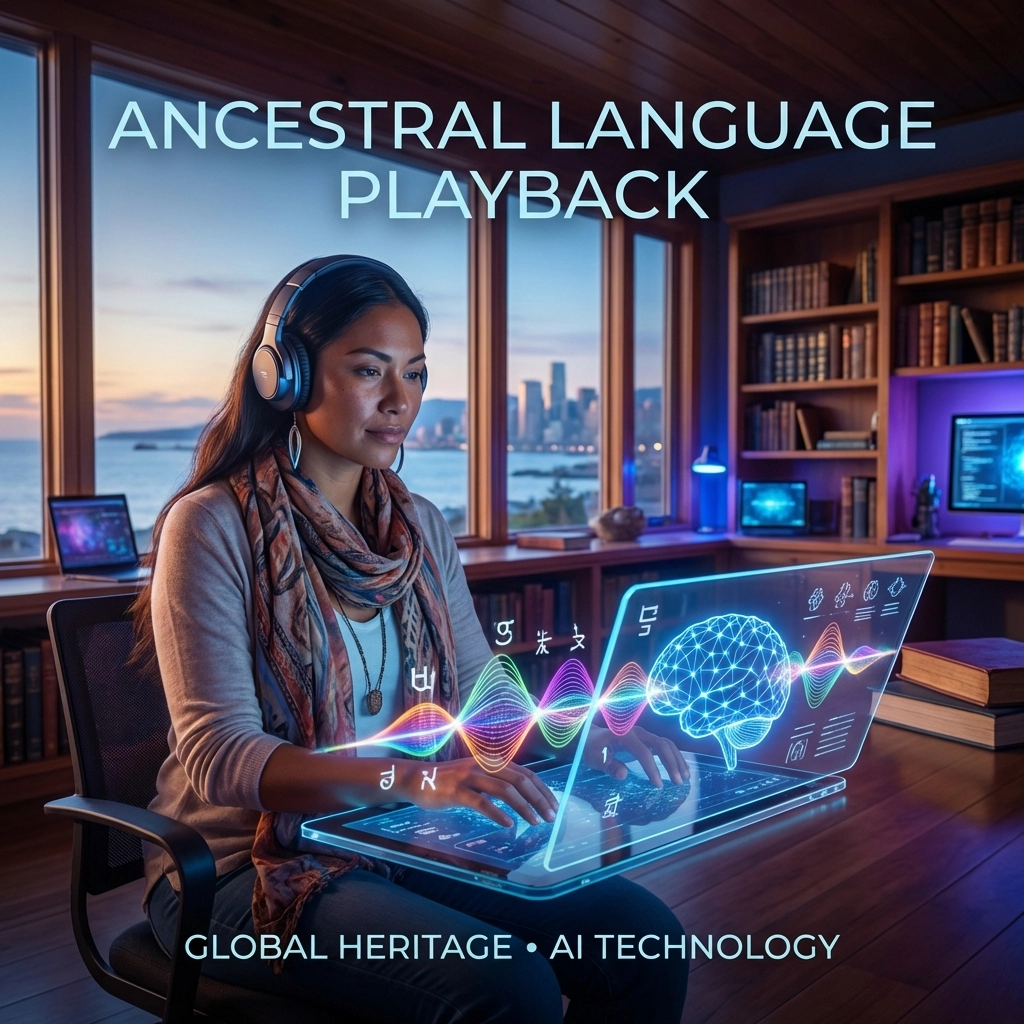
Immersive Listening Experiences: Virtual reality and spatial audio technology can recreate the acoustic environments where ancestral recordings were made, providing younger generations with deeper connections to their linguistic heritage. These experiences require careful design to maintain reverence while embracing technological innovation.
Cross-Community Collaboration: Digital platforms can facilitate respectful sharing of preservation techniques and restoration knowledge between indigenous communities worldwide, supporting global language revitalization efforts while respecting individual community protocols.

Building Trust Through Transparency
The distinction between ancestral language playback and chatbot roleplay ultimately rests on trust between technology providers and indigenous communities. This trust develops through consistent demonstration of respect, transparency about technological capabilities and limitations, and genuine partnership in preservation efforts.
Our commitment at Ejiogbe Voices extends beyond technical implementation to encompass ongoing relationship building with communities whose ancestral voices we help preserve. We provide detailed documentation about our restoration processes, maintain transparent privacy policies regarding data handling, and offer multiple channels for community feedback and concern resolution.
Honoring Ancestors Through Technology
When we choose ancestral language playback over chatbot roleplay, we make a statement about our values and priorities. We declare that some things are too sacred for artificial recreation, too precious for synthetic generation, and too important for technological convenience to override cultural protocol.
Ancestral voices speak to us across time not as raw material for AI systems, but as complete expressions of human wisdom, spiritual insight, and cultural knowledge. They deserve our reverence, our careful stewardship, and our commitment to preservation rather than appropriation.
Through respectful technology that prioritizes authentic playback over artificial generation, we can ensure that ancestral voices continue speaking to future generations with their original power, intention, and sacred significance intact. This is not just a technical choice: it is a moral imperative that honors the ancestors who trusted their voices to our care.
The voices of our ancestors call to us across the centuries, carrying wisdom that transcends technological innovation. Our response to this call will define not only how we preserve the past, but how we shape the future of cultural stewardship in the digital age.