
Indigenous languages carry more than words: they hold the prayers of ancestors, the wisdom of generations, and the spiritual heartbeat of entire peoples. When we speak of preserving these sacred tongues through artificial intelligence, we enter territory that demands the highest reverence and the clearest boundaries. There are lines in this work that must never be crossed, not because of legal requirements alone, but because crossing them violates the very essence of what makes these languages sacred.
The path forward in AI-assisted Indigenous language preservation requires us to understand these boundaries with crystal clarity. This is not about limiting technology's potential: it's about ensuring that innovation serves Indigenous communities rather than exploiting them.
The Sacred Nature of Indigenous Languages
Every Indigenous language represents thousands of years of accumulated wisdom, spiritual practice, and cultural identity. Unlike commercial datasets, these languages encode creation stories, healing knowledge, ceremonial protocols, and ways of understanding the world that cannot be reduced to mere data points.
When elders share their language, they're not simply providing linguistic samples: they're entrusting future generations with their ancestors' voices. This trust creates profound responsibilities that extend far beyond typical data collection practices.

Boundaries That Must Never Be Crossed
Exploitation Without Consent
The most fundamental line involves consent and community control. Indigenous communities must retain absolute authority over their language data. The Standing Rock Sioux Tribe's 2024 lawsuit against an educational company exemplifies what happens when this boundary is violated: the company exploited Lakota recordings without consent, profited from tribal knowledge, and then charged the community extra fees to restore their own access.
True preservation projects implement protective measures allowing participants to withdraw their recordings at any time and exclude their knowledge from AI development. This upholds data sovereignty: the principle that Indigenous communities control how their cultural data is collected, stored, and used.
Technological Colonialism
AI systems cannot be imposed externally or developed without meaningful Indigenous leadership. When outside entities control how Indigenous knowledge is used, processed, and distributed, we recreate historical patterns of colonization through technology.
Community-controlled projects succeed because they center Indigenous voices in every decision, from initial design through implementation and ongoing governance. The technology serves the community's goals, not external commercial interests.
Algorithmic Distortion of Cultural Meaning
Machine translation and AI systems without proper cultural context can perpetuate linguistic stereotypes and distort the profound nuances that make Indigenous languages unique. These systems risk flattening rich cultural meanings into standardized outputs that lose their spiritual and ceremonial significance.
Successful AI preservation respects that many Indigenous concepts simply cannot be translated directly: they require cultural context, relationship, and lived experience to be truly understood.

Discouraging Community Efforts
AI predictions about language "doom" can become self-fulfilling prophecies that discourage community revitalization efforts. Algorithms should never be presented as determining a language's fate, which ignores Indigenous resilience, agency, and the miraculous ways communities have sustained their languages despite centuries of suppression.
Technology must inspire and support community efforts, not replace or discourage them with dire predictions based on incomplete data.
Replacing Human Relationships
Perhaps the most crucial boundary involves the role of technology itself. AI must function as one tool among many, never as a replacement for human relationships, elder wisdom, or lived cultural practice. When technology begins substituting for authentic cultural transmission between elders and youth, we've crossed a line that undermines the very purpose of preservation.
Why These Boundaries Matter
These ethical lines exist because Indigenous languages are not merely linguistic systems: they are living expressions of worldviews that have survived genocide, boarding schools, and systematic suppression. The trauma embedded in this history means that any preservation effort must actively work against patterns of exploitation and cultural appropriation.
When we honor these boundaries, we create space for technology to serve its proper role: amplifying Indigenous voices, supporting community-led revitalization, and ensuring that these precious languages remain accessible for future generations.
Successful projects like New Zealand's "Kōrero Māori" demonstrate how technology can succeed when it centers elder voices and community relationships alongside innovation. The AI assists human teachers rather than replacing them, and community members control how their language data is used.

The Right Approach: Community-Centered Preservation
Ethical AI preservation requires Indigenous leadership in all decisions, participatory design processes, and community-controlled data governance. Communities must benefit equitably from their language data rather than being exploited in the data economy.
This means:
- Elder Authority: Recognizing elders as the primary authorities on their languages, with AI serving their guidance rather than replacing their wisdom
- Community Ownership: Ensuring communities retain full rights to their language data and can remove it from systems at any time
- Cultural Context: Developing AI systems that respect the spiritual and ceremonial significance of Indigenous languages
- Collaborative Design: Building technology with Indigenous communities, not for them
- Transparent Benefit: Ensuring communities receive direct benefits from preservation efforts
Moving Forward with Respect
At Ejiogbe Voices, we understand that our role is to create technology that serves Indigenous communities' preservation goals while respecting these crucial boundaries. Our platform prioritizes community control, elder authority, and cultural context in every feature we develop.
The future of Indigenous language preservation depends on our collective commitment to honoring these lines that must not be crossed. When we approach this sacred work with proper reverence, AI becomes a powerful ally in ensuring that ancestral voices continue speaking to future generations.
Technology alone cannot revive a language: only communities can do that. But when developed with deep respect for Indigenous wisdom and authority, AI can support the miraculous work of cultural continuity that Indigenous peoples have always done.
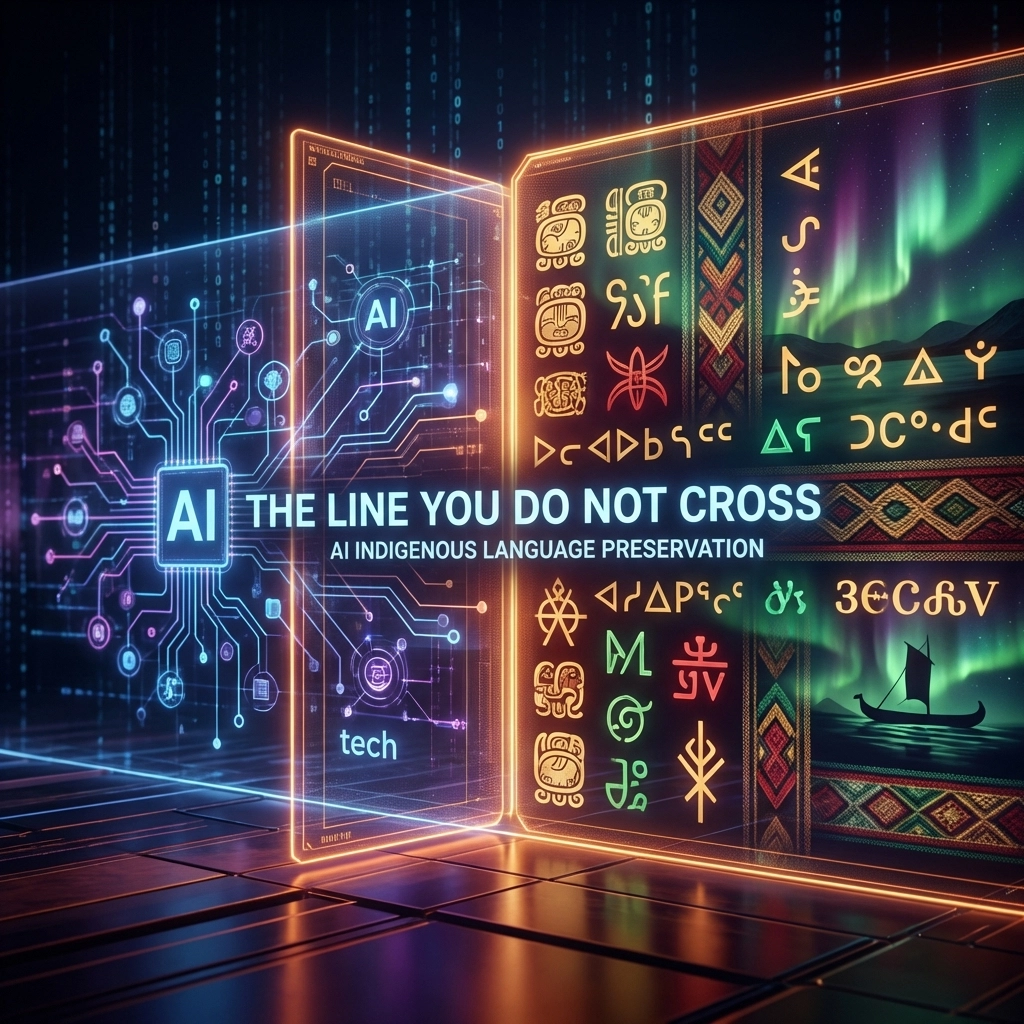
The choice before us is clear: we can either repeat historical patterns of exploitation through new technology, or we can forge a path that truly serves the sacred trust placed in us by elders and ancestors. The line you do not cross is the one that separates preservation from exploitation, support from replacement, and technology that serves from technology that appropriates.
For those ready to engage in this work with proper respect, explore our community guidelines and learn how technology can honor the sacred responsibility of Indigenous language preservation.