
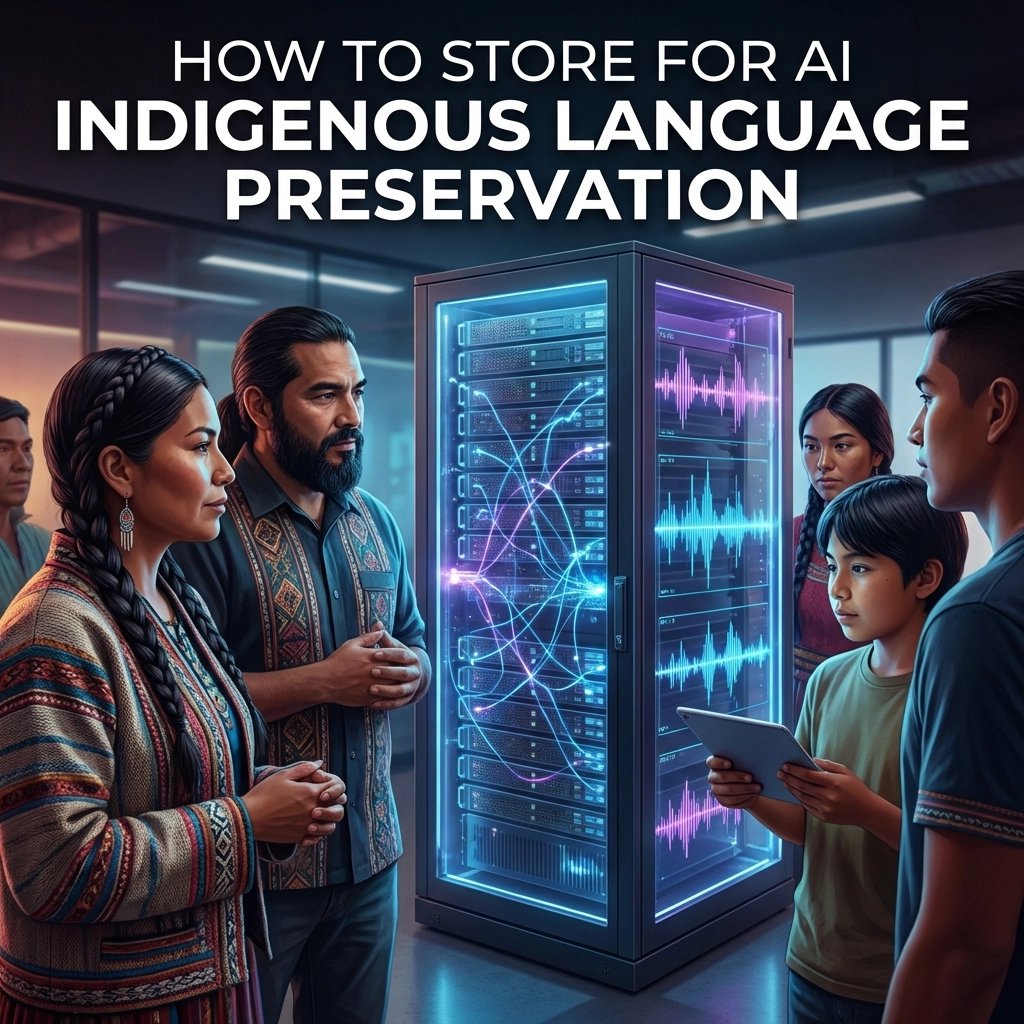
The storage of indigenous language data for AI preservation carries profound responsibility. When we safeguard ancestral voices, we become custodians of wisdom that spans generations. The way we store this sacred knowledge determines whether future communities will access their heritage with dignity or watch it deteriorate in digital neglect.
Proper storage goes beyond technical infrastructure: it encompasses cultural protocols, community sovereignty, and spiritual stewardship. Every decision about where and how we preserve indigenous languages shapes the legacy we leave for generations yet unborn.
Understanding the Sacred Nature of Language Data
Indigenous languages exist as living ecosystems of meaning, embedded with cultural knowledge, spiritual teachings, and ancestral wisdom. When we digitize these languages for AI preservation, we're not merely storing words: we're preserving entire worldviews.
Language data encompasses multiple interconnected layers: spoken words carry tonal meanings, ceremonial contexts provide spiritual significance, and storytelling traditions embed historical knowledge. Each element requires specialized storage approaches that honor both technical requirements and cultural protocols.

The Hawaiian language revitalization project demonstrates this complexity, utilizing dozens of hours of labeled audio alongside millions of pages of digitized newspaper text. This multimodal approach recognizes that language preservation demands comprehensive data types working in harmony.
Technical Infrastructure for Multimodal Storage
Effective AI language preservation requires robust storage systems capable of handling diverse data formats simultaneously. Audio recordings, video documentation, written texts, and cultural annotations must coexist within unified frameworks that preserve relationships between different media types.
Audio Storage Requirements
High-quality audio preservation demands lossless compression formats that maintain tonal accuracy and subtle pronunciation details. Indigenous languages often contain phonetic nuances absent from dominant languages, requiring storage systems that capture these distinctive elements without degradation.
Storage infrastructure must accommodate various recording qualities, from contemporary studio recordings to historical field documentation. Each audio file requires comprehensive metadata including speaker demographics, recording context, and cultural significance markers.
Visual and Video Documentation
Sign languages, ceremonial gestures, and cultural demonstrations require sophisticated video storage solutions. These visual elements often carry meaning impossible to capture through audio alone, demanding high-resolution preservation with color accuracy and temporal synchronization.
Storage systems must maintain video-audio alignment while preserving subtitle timing and cultural annotation overlays. The Nüshu preservation project exemplifies this approach, creating datasets that align visual character recognition with linguistic meaning across multiple modalities.
Community-Controlled Access Frameworks
Indigenous language storage must prioritize community sovereignty over data access and distribution. Technical storage solutions serve community governance structures rather than replacing them, ensuring that tribal protocols determine who accesses what information under which circumstances.

Tiered Access Systems
Storage architectures should implement graduated access levels that reflect community hierarchies and cultural protocols. Public materials might include basic vocabulary and common phrases, while restricted tiers contain ceremonial language, sacred stories, or sensitive historical documentation.
These access controls must operate seamlessly across different storage platforms while maintaining community oversight. The archive system demonstrates how technical infrastructure can support community-defined access protocols.
Community Validation Workflows
Storage systems must accommodate community review processes where elders and cultural experts validate data accuracy before permanent archival. This validation workflow requires staging areas where materials await community approval before moving to long-term preservation storage.
Expert annotators trained in computational linguistics work alongside community knowledge holders to ensure technical accuracy aligns with cultural authenticity. This collaborative validation process demands storage infrastructure that supports iterative review cycles.
Security and Cultural Protection Measures
Indigenous language data requires protection mechanisms that extend beyond conventional cybersecurity approaches. Cultural protocols demand specialized security measures that prevent unauthorized access while maintaining data integrity across generations.
Encryption and Privacy Standards
Storage encryption must meet highest security standards while remaining accessible to authorized community members. Multi-layered encryption approaches protect against external threats while internal access controls ensure community sovereignty over data usage.
Privacy protection encompasses not only individual speaker rights but collective community ownership of linguistic heritage. Storage systems must implement consent tracking that honors both personal preferences and tribal governance decisions.
Backup and Redundancy Strategies
Language preservation demands geographic redundancy that protects against natural disasters, political instability, or technological failure. Multiple storage locations ensure continuity while maintaining community control over each backup facility.
Cloud storage integration requires careful evaluation of corporate terms of service to ensure they align with indigenous data sovereignty principles. Community-controlled storage infrastructure often provides better sovereignty protection than commercial cloud solutions.

Long-term Preservation Architecture
Indigenous language storage must transcend current technological limitations, anticipating format migrations and platform evolution across decades or centuries. Storage architecture should prioritize format independence and accessibility over technological convenience.
Format Standardization
Open-source formats provide better long-term accessibility than proprietary alternatives that might become obsolete. Storage systems should implement format migration pathways that preserve data integrity while adapting to technological evolution.
Standardized metadata schemas ensure that future systems can interpret historical recordings correctly. The development of indigenous-specific metadata standards helps preserve cultural context alongside linguistic content.
Sustainability Planning
Storage infrastructure requires sustainable funding models that extend beyond initial grant periods or project timelines. Community ownership of storage infrastructure provides better long-term sustainability than dependence on external institutions.
Technical documentation must remain accessible to future generations who will maintain and migrate these preservation systems. Knowledge transfer protocols ensure that storage management expertise remains within communities rather than relying on external technical support.
Implementation Guidelines for Communities
Communities beginning AI language preservation projects need practical guidance for establishing appropriate storage infrastructure that honors both technical requirements and cultural protocols.
Starting Small and Scaling Wisely
Initial storage implementations should focus on high-value materials that provide immediate community benefit. Basic vocabulary recordings and common phrases can establish technical workflows before expanding to more complex cultural materials.
Pilot projects help communities understand storage requirements while developing internal expertise. The documentation resources provide structured guidance for communities beginning this journey.
Building Community Capacity
Storage management requires ongoing community involvement rather than external dependence. Training programs should develop local expertise in data management, backup procedures, and access control administration.

Technical capacity building must align with community learning preferences and cultural protocols. Elder-youth mentorship programs can effectively transfer both technological skills and cultural knowledge within storage management workflows.
Collaborative Storage Networks
Indigenous communities often benefit from shared storage infrastructure that pools resources while maintaining individual community sovereignty. Collaborative networks provide technical efficiency without compromising cultural autonomy.
Inter-community Cooperation
Shared storage platforms can reduce costs while providing robust backup capabilities across multiple communities. These collaborative approaches require careful protocol development that respects each community's unique governance structures.
Network partnerships should prioritize indigenous-led organizations over external institutions when possible. Community-controlled collaborations provide better sovereignty protection than academic or corporate partnerships.
Technical Standards Coordination
Collaborative storage networks benefit from coordinated technical standards that enable data portability while preserving community control. Standardized approaches reduce technical complexity without imposing cultural uniformity.
The development of indigenous data governance protocols helps establish ethical frameworks for collaborative storage initiatives. These protocols ensure that cooperation enhances rather than diminishes community sovereignty over linguistic heritage.
Moving Forward with Purpose
Storage infrastructure for AI indigenous language preservation represents more than technical implementation: it embodies community commitment to cultural continuity across generations. Every storage decision reflects values about accessibility, sovereignty, and cultural stewardship.
Communities embarking on this sacred work carry forward ancestral responsibilities while embracing technological possibilities. Proper storage infrastructure ensures that future generations will access their linguistic heritage with dignity, authenticity, and community support.
The path forward requires careful balance between technical excellence and cultural integrity, creating storage solutions that serve community needs while preserving the sacred nature of indigenous knowledge. Through thoughtful implementation, storage infrastructure becomes a bridge connecting ancestral wisdom with future possibilities.